Many beginners wonder whether SEO is still worth learning in an era dominated by AI chatbots and automated search experiences. The answer is a resounding yes. While search behavior is evolving rapidly, organic search remains one of the most valuable traffic sources for businesses, bloggers, and online stores. Recent industry data shows that Google still controls roughly 90% of the global search market, making search engine optimization one of the most powerful digital marketing channels available. Research also shows that organic search continues to drive a significant percentage of website traffic worldwide, despite the rise of AI-generated answers and search summaries. Search engines remain the primary gateway through which users discover products, services, and information.
The SEO landscape has certainly changed. AI Overviews, zero-click searches, and conversational search tools are reshaping how users interact with information online. However, these changes have not eliminated SEO. Instead, they have increased the importance of creating authoritative, trustworthy, and user-focused content. Businesses that understand these shifts can gain a significant advantage. Rather than focusing on shortcuts and outdated tactics, beginners should learn the fundamentals and build a sustainable SEO strategy that works today and continues working tomorrow.
Step 1 – Understand How Search Engines Work
Before diving into keyword research or content creation, it’s important to understand the basic mechanics behind search engines. Search engines operate through three primary processes: crawling, indexing, and ranking. Crawlers scan billions of web pages, collecting information and storing it in massive databases. Once indexed, those pages are evaluated and ranked according to hundreds of factors designed to determine relevance and quality.
Think of search engines as giant digital librarians. When someone asks a question, the librarian’s job is to find the most relevant and trustworthy answer as quickly as possible. If your website clearly answers questions and provides value, it stands a better chance of appearing near the top of search results. Understanding this principle changes how beginners approach SEO. Instead of trying to manipulate rankings, they focus on helping users solve problems.
Step 2 – Define Your SEO Goals
SEO without clear goals is like setting off on a road trip without a destination. Before optimizing anything, determine exactly what success looks like. Some websites want more traffic. Others want leads, sales, newsletter subscribers, or local customers. Defining goals helps shape every SEO decision moving forward.
For example, an eCommerce store selling fitness equipment may prioritize product-related keywords and conversion-focused content. A local service provider may focus on local SEO and Google Business visibility. A blogger might prioritize informational content and organic traffic growth. Your goals influence keyword selection, content strategy, link-building efforts, and performance measurements. The clearer your goals are, the easier it becomes to measure progress and make meaningful improvements.
Step 3 – Identify Your Target Audience
Successful SEO starts with understanding the people you want to reach. Too many beginners focus exclusively on keywords while ignoring the human beings behind those searches. Every search query represents a real person trying to solve a problem, answer a question, or make a purchasing decision.
Start by creating audience profiles. Consider demographics, interests, pain points, challenges, and goals. Ask yourself what keeps your audience awake at night. What questions are they asking? What solutions are they looking for? When you understand your audience deeply, creating relevant content becomes much easier. Search engines reward websites that consistently satisfy user intent because their primary goal is delivering useful results to searchers.
Step 4 – Perform Keyword Research
Keyword research forms the foundation of every successful SEO strategy. Keywords reveal what people are searching for and how they search for it. Effective keyword research helps you create content that aligns with actual user demand rather than assumptions.
Modern keyword research involves identifying a mix of short-tail and long-tail keywords. Long-tail keywords often offer lower competition and higher conversion potential because they target specific user needs. For example, instead of targeting “SEO,” a beginner might target “SEO plan for beginners” or “how to start SEO in 2026.”
Finding Low-Competition Keywords
One of the smartest approaches for beginners is focusing on low-competition opportunities. These keywords may have lower search volume, but they often offer a faster path to rankings. Look for questions, niche topics, and specific user problems. Use keyword tools to identify search volume, keyword difficulty, and related search terms.
Ex : Semrush,Ahref
| Keyword Type | Competition | Conversion Potential |
|---|---|---|
| Short-Tail Keywords | High | Medium |
| Long-Tail Keywords | Low to Medium | High |
| Question Keywords | Low | High |
| Local Keywords | Medium | Very High |
Step 5 – Analyze Search Intent
Search intent is arguably more important than keywords themselves. Search engines have become remarkably effective at understanding why users search. Every query generally falls into one of four categories: informational, navigational, commercial, or transactional.
Imagine someone searching “best SEO tools for beginners.” They are likely comparing options before making a decision. Someone searching “buy SEO software” is much closer to purchasing. Creating content that matches intent dramatically improves ranking potential. Beginners often fail because they create content that targets a keyword but ignores the user’s actual objective. Understanding intent allows you to create highly relevant content that satisfies both users and search engines.
Step 6 – Study Your Competitors
Competitor analysis reveals valuable opportunities and insights. Instead of guessing what works, examine websites already ranking for your target keywords. Analyze their content length, structure, keyword usage, backlink profiles, and user experience.
This doesn’t mean copying competitors. It means identifying patterns and discovering gaps you can fill. Maybe competitors cover topics superficially while you can provide deeper insights. Perhaps they ignore emerging trends or fail to answer important user questions. SEO success often comes from creating content that is more useful, comprehensive, and engaging than existing alternatives.
Step 7 – Build a Logical Site Structure
Website structure influences both user experience and search engine crawlability. A well-organized website helps visitors find information quickly while helping search engines understand relationships between pages.
Imagine your website as a library. Categories represent major sections, while pages represent books within those sections. Clear navigation, logical hierarchies, and descriptive URLs make it easier for both users and search engines to navigate your site. A strong structure also supports internal linking, which plays a critical role in SEO performance.
Step 8 – Optimize On-Page SEO
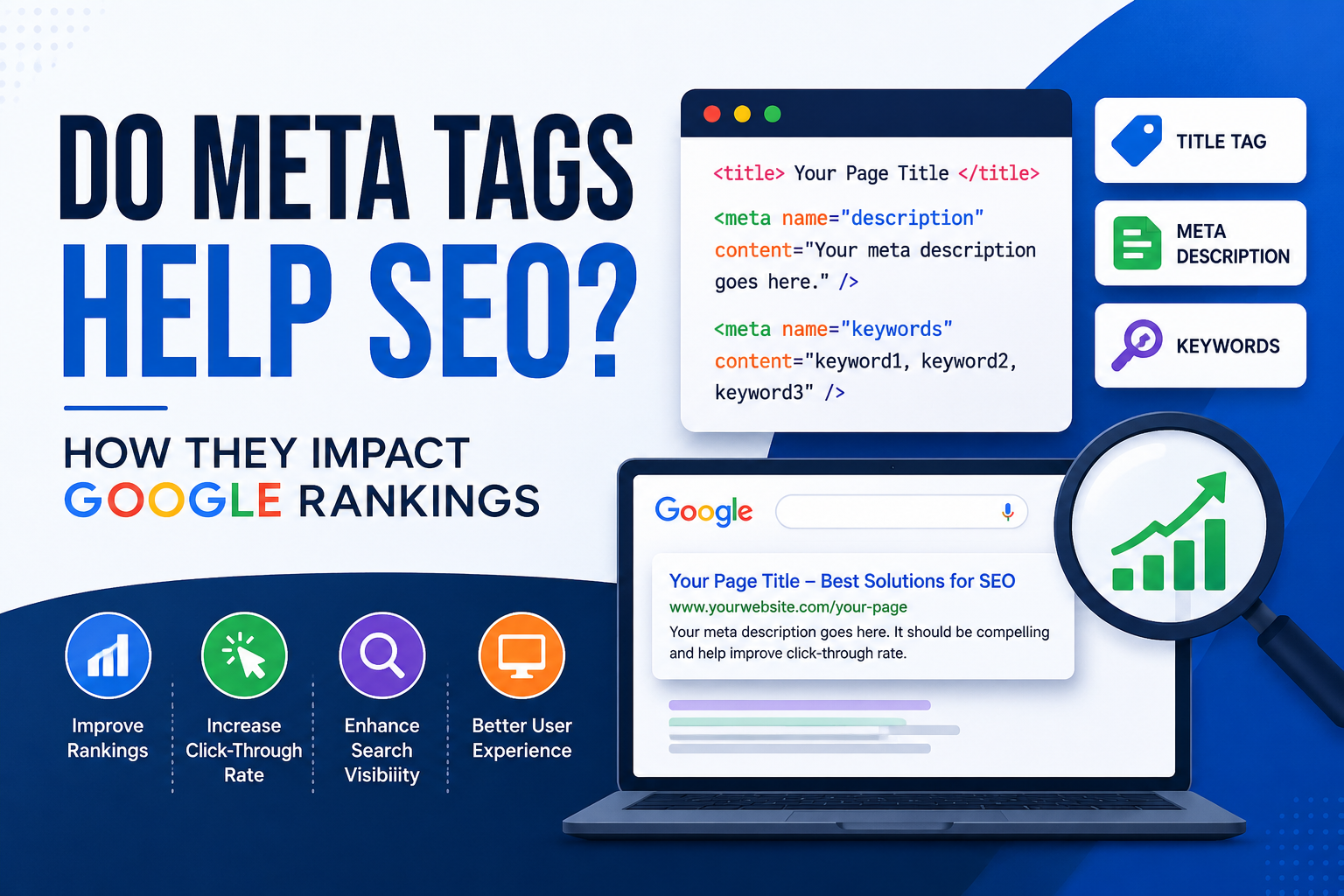
On-page SEO involves optimizing individual pages to improve search visibility. This includes title tags, meta descriptions, headings, image optimization, and keyword placement. Effective on-page SEO helps search engines understand the topic and purpose of your content.
Essential On-Page Elements
Several elements deserve special attention:
- Title Tags
- Meta Descriptions
- H1 Headings
- URL Structure
- Image Alt Text
- Internal Links
- Keyword Placement
Each element contributes to overall optimization. Think of them as signals that help search engines interpret content relevance. While none guarantee rankings independently, together they create a strong foundation for visibility.
Step 9 – Create High-Quality Content
Content remains the heart of SEO. Search engines prioritize content that demonstrates expertise, authority, and trustworthiness. High-quality content solves problems, answers questions, and delivers genuine value to readers.
The best content isn’t necessarily the longest content. Instead, it is the most useful. Every article should address a specific topic comprehensively while remaining easy to understand. Include examples, practical tips, data, visuals, and actionable advice whenever possible. Readers should leave feeling that their question has been fully answered. That level of satisfaction often translates into better engagement signals, backlinks, and rankings.
Step 10 – Optimize for AI Search and Featured Snippets
Search is evolving beyond traditional blue links. AI-generated summaries and featured snippets increasingly provide answers directly within search results. Businesses that optimize for these formats gain additional visibility.
Structure content using clear headings, concise answers, and logical organization. Answer common questions directly and provide supporting details afterward. This format improves the chances of appearing in featured snippets and AI-generated summaries. As search continues evolving, visibility increasingly depends on content clarity and authority rather than keyword density alone.
Step 11 – Improve Website Speed
Website speed directly affects both user experience and SEO performance. Users expect pages to load quickly, and delays often result in higher bounce rates and lower conversions. Search engines recognize this behavior and factor performance into rankings.
Improve speed by compressing images, minimizing unnecessary code, enabling caching, and using reliable hosting. Regular performance audits help identify bottlenecks that slow down user experiences. Faster websites not only rank better but also create stronger first impressions and encourage deeper engagement.
Step 12 – Make Your Site Mobile-Friendly
Mobile devices account for a significant share of internet traffic today. Search engines primarily evaluate mobile versions of websites when determining rankings. A site that performs poorly on smartphones risks losing both visibility and visitors.
Responsive design ensures your website adapts to different screen sizes. Test navigation, readability, loading speed, and user interactions across various devices. Mobile optimization is no longer optional; it is a fundamental requirement for modern SEO success.
Step 13 – Build Internal Links
Internal linking helps distribute authority throughout your website while guiding visitors toward related content. Every internal link creates pathways that improve navigation and help search engines discover pages.
Think of internal links as roads connecting destinations. A strong network allows users to explore more content while strengthening topical relevance. Strategic internal linking also helps highlight important pages and improve indexing efficiency. Beginners often overlook this simple tactic despite its significant impact.
Step 14 – Earn Quality Backlinks
Backlinks remain one of the strongest ranking signals in SEO. When reputable websites link to your content, search engines interpret those links as endorsements. However, quality matters far more than quantity.
Focus on earning links naturally through valuable content, industry relationships, guest contributions, and original research. Avoid manipulative link schemes that violate search engine guidelines. Building authority takes time, but trustworthy backlinks can dramatically improve visibility and credibility.
Step 15 – Track SEO Performance
SEO success depends on measurement. Without data, it’s impossible to know whether your strategy is working. Monitoring performance allows you to identify opportunities, diagnose issues, and refine your approach.
Key Metrics to Monitor
| Metric | Why It Matters |
| Organic Traffic | Measures visibility growth |
| Keyword Rankings | Tracks search performance |
| Click-Through Rate | Indicates listing effectiveness |
| Bounce Rate | Reflects user engagement |
| Conversions | Measures business impact |
| Backlinks | Evaluates authority growth |
Regular analysis helps uncover trends and guide future optimization efforts. Small improvements often compound into substantial long-term gains.
Step 16 – Continuously Update and Improve Content
SEO is not a one-time project. Search engines continuously update algorithms, competitors publish new content, and user expectations evolve. Content that performs well today may decline tomorrow if neglected.
Regularly review existing pages for accuracy, relevance, and completeness. Update statistics, improve formatting, expand sections, and address emerging topics. Refreshing content signals ongoing relevance and helps maintain rankings. Many websites achieve significant traffic gains simply by updating existing content rather than creating new pages.
Conclusion
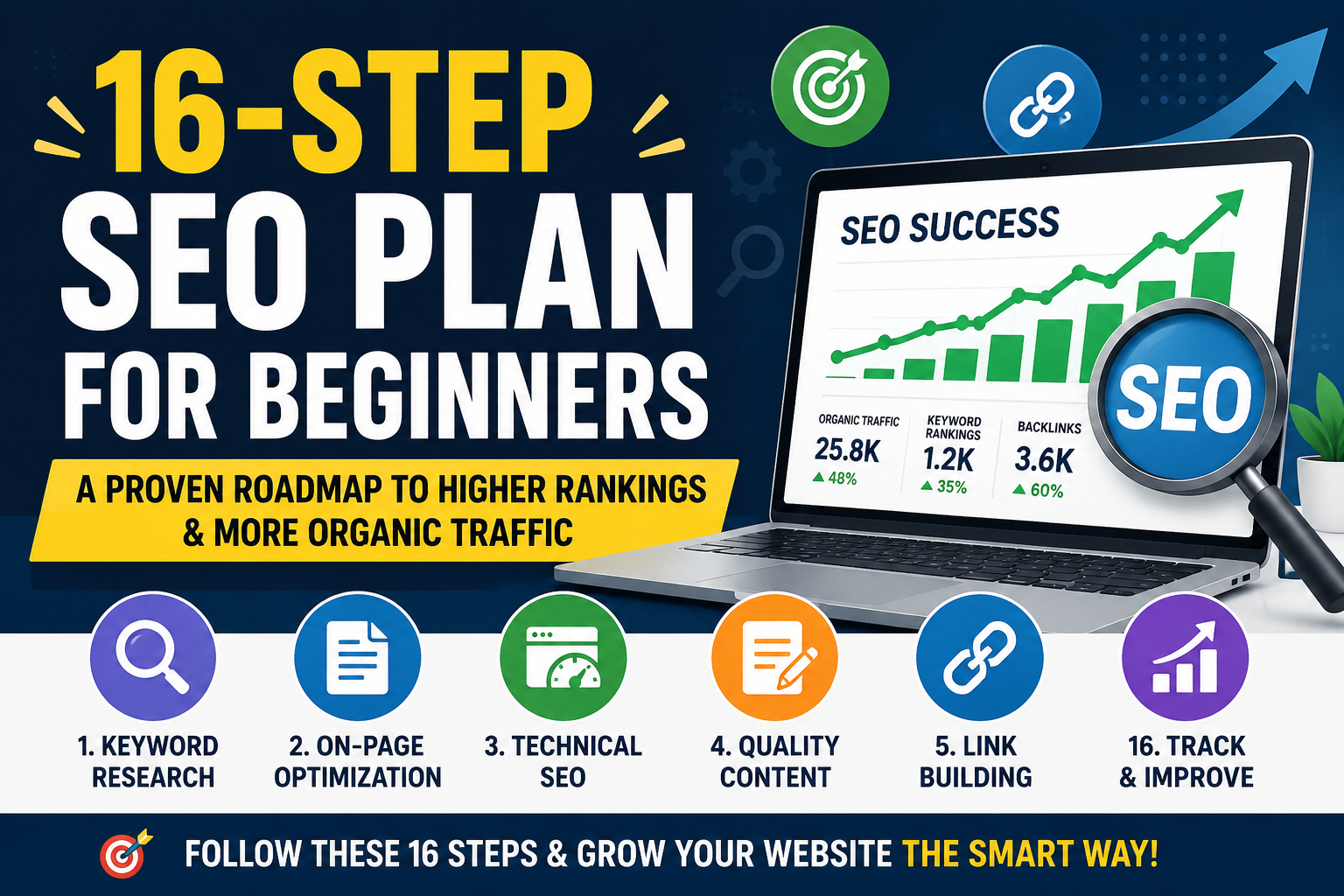
A successful SEO strategy does not require advanced technical expertise or massive budgets. Beginners who follow a structured process can achieve impressive results by focusing on fundamentals. This 16-step SEO plan provides a practical roadmap that balances keyword research, content quality, technical optimization, and authority building. Search continues evolving through AI-powered experiences and changing user behaviors, but the underlying principle remains unchanged: provide valuable information that genuinely helps people.
Businesses, bloggers, and website owners who commit to these fundamentals position themselves for sustainable growth. SEO rewards patience, consistency, and continuous improvement. Start with one step, build momentum, and refine your strategy over time. The results may not appear overnight, but the long-term benefits can transform your online visibility and business growth.
FAQs
1. How long does SEO take to show results?
Most websites begin seeing measurable improvements within three to six months, although highly competitive industries may require longer.
2. Is SEO still effective with AI search tools?
Yes. AI search tools still rely heavily on authoritative content, making SEO more important than ever for visibility and credibility.
3. What is the most important SEO factor for beginners?
High-quality content aligned with user intent remains the most important factor for long-term SEO success.
4. Do backlinks still matter in 2026?
Absolutely. Quality backlinks continue to be a major ranking signal and contribute significantly to website authority.
5. Can I do SEO without paying for expensive tools?
Yes. Many free tools provide sufficient data for beginners to conduct keyword research, monitor rankings, and improve website performance.