The B2B buying journey has changed dramatically over the last few years. Decision-makers no longer rely solely on sales representatives for information. Instead, they spend significant time researching solutions online before ever speaking with a company. Recent industry data shows that organic search remains one of the largest traffic drivers for B2B websites, accounting for approximately 53% to 76% of total website traffic for many organizations. At the same time, AI-powered search experiences are influencing how prospects discover brands and evaluate vendors. Studies indicate that a growing percentage of B2B buyers now interact with AI-generated search results before clicking through to websites. These changes mean that businesses must rethink how they approach SEO in 2026. SEO is no longer just about rankings; it is about visibility across traditional search engines, AI-generated answers, and digital research channels. Companies that invest in a strategic B2B SEO framework can generate consistent leads, reduce customer acquisition costs, and create a predictable revenue pipeline. Businesses that ignore SEO risk losing visibility during the earliest stages of the buyer journey, when purchasing decisions are already beginning to take shape.
The Evolution of B2B Search Behavior
Today’s consumers are better knowledgeable than ever. They compare vendors, read reviews, consume educational content, and evaluate solutions long before they request a demo. This self-directed research process creates enormous opportunities for organizations that publish valuable content. Instead of chasing prospects through cold outreach alone, companies can attract buyers when they actively search for solutions. Search visibility allows brands to establish credibility before competitors even enter the conversation. Since many purchasing committees involve multiple stakeholders, appearing consistently across informational and commercial searches helps build trust throughout the decision-making process. Organizations that dominate search results often become the default choice because buyers repeatedly encounter their expertise across multiple touchpoints.
How AI Search Is Changing Buyer Journeys
AI search tools such as ChatGPT , Gemini, Perplexity, and AI Overviews are reshaping how users consume information. Buyers increasingly receive summarized answers directly from AI systems before visiting websites. This means businesses must optimize not only for traditional rankings but also for AI visibility. Structured content, authoritative sources, expert insights, and comprehensive topic coverage now play critical roles. Companies that create trustworthy and well-organized content are more likely to be referenced by AI systems, increasing brand exposure and influencing purchasing decisions even before prospects reach a website.
Step 1 – Describes Your Ideal Customer Profile (ICP)
A successful B2B SEO strategy starts with understanding exactly who you want to attract. Many businesses make the mistake of targeting broad audiences, resulting in traffic that never converts into revenue. Your Ideal Customer Profile serves as the foundation for every SEO decision. It identifies the industries, company sizes, job titles, challenges, and purchasing behaviors of your most valuable prospects. When SEO efforts align with an ICP, content becomes more relevant, keyword targeting becomes more precise, and lead quality improves significantly. Think of your ICP as a GPS system guiding your entire digital marketing strategy. Without it, you may generate traffic but struggle to produce meaningful business results.
Align SEO With Revenue Goals
Revenue should be the primary objective of B2B SEO. Instead of focusing solely on traffic growth, identify the types of searches that influence purchasing decisions. Collaborate with sales teams to determine which prospects generate the highest lifetime value. Analyze customer data to identify common patterns among successful deals. This alignment ensures that SEO efforts contribute directly to business growth rather than vanity metrics.
Identify High-Intent Buyer Personas
Develop detailed buyer personas that reflect real decision-makers. Include information about their responsibilities, pain points, objectives, and search behaviors. A marketing director searching for lead generation strategies has different needs than a CEO evaluating enterprise software solutions. Understanding these distinctions allows you to create targeted content that resonates with each audience segment.
Step 2 – Conduct Strategic Keyword Research
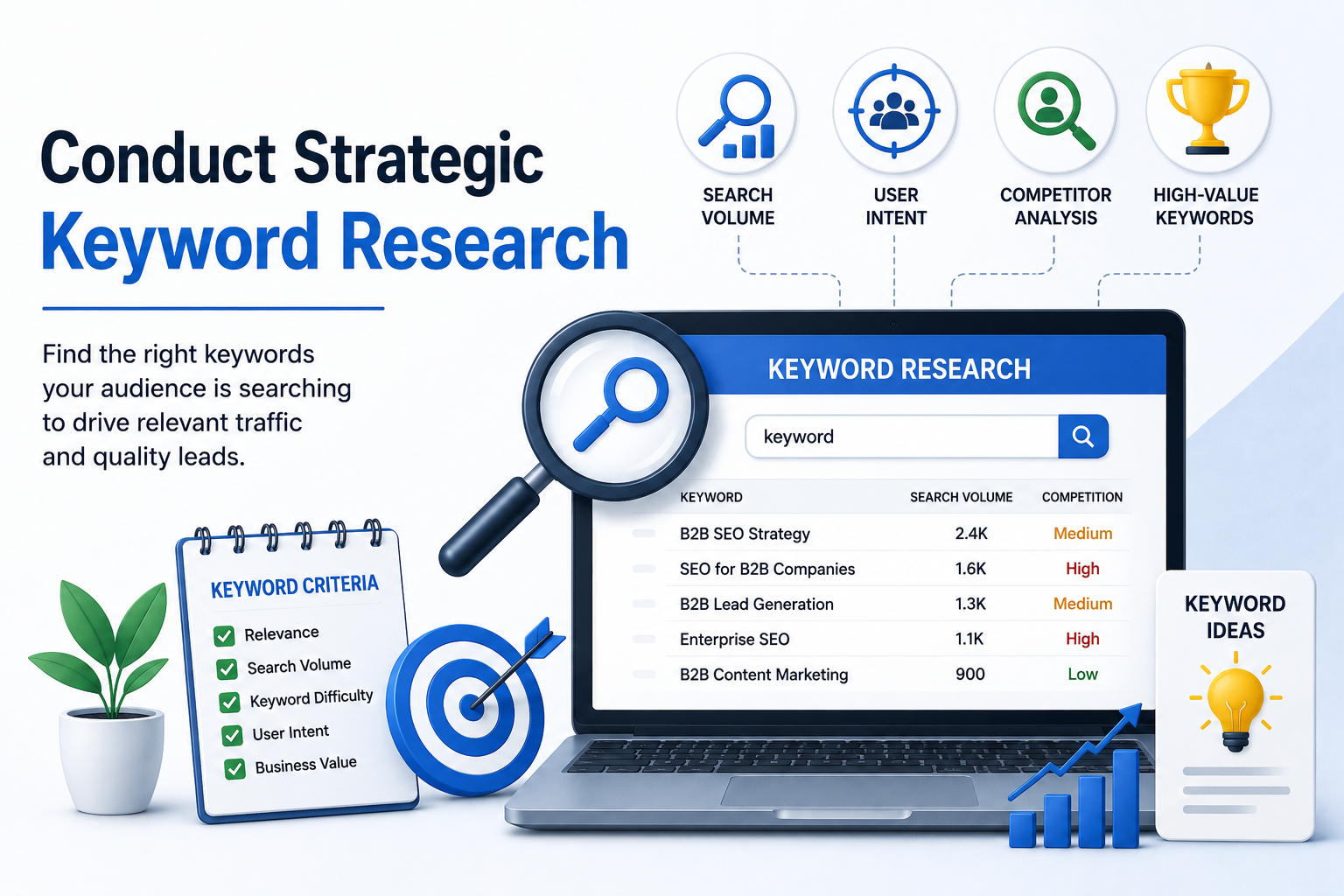
Keyword research remains one of the most important components of B2B SEO. However, the focus in 2026 has shifted from volume-based targeting to intent-based optimization. A keyword with 100 monthly searches can generate more revenue than a keyword with 10,000 searches if it aligns closely with purchasing intent. Effective keyword research uncovers the language buyers use throughout their journey, from initial awareness to final vendor selection. The goal is not simply to rank for keywords but to attract prospects who are actively seeking solutions.
Focus on Commercial Intent Keywords
Commercial keywords indicate that users are evaluating products, services, or vendors. Examples include phrases like “best B2B SEO agency,” “enterprise CRM software comparison,” or “SEO services for SaaS companies.” These searches often signal stronger purchase intent and deserve priority within your content strategy.
Build Topic Clusters Around Buyer Stages
Content should be arranged according to topic clusters that cover various phases of the customer experience. Create awareness-stage content for educational searches, consideration-stage content for solution comparisons, and decision-stage content for vendor evaluation. This structure improves topical authority while guiding users toward conversion-focused pages.
| Buyer Stage | Search Intent | Content Type |
| Awareness | Learning | Blogs, Guides |
| Consideration | Comparing Options | Case Studies, Comparison Articles |
| Decision | Choosing Vendor | Service Pages, Demos, Consultations |
Step 3 – Make High-Value Content That Converts
Content remains the engine that powers B2B SEO success. Search engines and AI systems prioritize content that demonstrates expertise, relevance, and usefulness. Generic articles rarely perform well because they fail to differentiate a brand from competitors. High-performing B2B content addresses specific challenges, provides actionable insights, and helps prospects make informed decisions. The objective is to become a trusted advisor rather than simply another vendor competing for attention.
Content Types That Generate B2B Leads
Several content formats consistently drive results in B2B environments:
- Industry reports
- Case studies
- Whitepapers
- Comparison guides
- Product tutorials
- Expert interviews
- ROI calculators
These assets provide value while positioning your company as an authority within its industry.
Optimizing Content for AI Search and GEO
Generative Engine Optimization (GEO) has emerged as an important extension of traditional SEO. To increase visibility in AI-generated responses, create comprehensive content with clear structure, factual accuracy, expert commentary, and credible citations. AI systems favor content that demonstrates authority and provides direct answers to user questions. Businesses that adapt early can gain a significant competitive advantage.
Step 4 – Strengthen Technical SEO Foundations
Even the best content can struggle without strong technical SEO. Technical optimization ensures that search engines can crawl, index, and understand your website effectively. It also enhances user experience, which directly influences engagement and conversion rates. A technically optimized website acts like a well-maintained highway, allowing both users and search engines to navigate efficiently.
Improve Website Performance and UX
Page speed has become increasingly important. Slow-loading websites frustrate users and contribute to higher bounce rates. Optimize images, reduce unnecessary scripts, and implement caching strategies to improve performance. Mobile responsiveness is equally important because decision-makers frequently conduct research across multiple devices.
Enhance Crawlability and Indexing
Review your site’s architecture regularly. Ensure important pages are accessible through internal links. Submit XML sitemaps, fix broken links, and monitor crawl errors through search engine tools. Technical excellence creates a strong foundation for sustainable SEO growth.
Step 5 – Build Authority Through Link Acquisition
Authority remains a significant ranking factor in SEO. Search engines interpret high-quality backlinks as endorsements of credibility and expertise. However, modern link-building focuses on earning links through value rather than manipulating rankings. The most effective strategies involve creating resources that industry publications, journalists, and influencers naturally reference.
Digital PR and Thought Leadership
Publish original research, industry studies, and expert insights that contribute meaningful knowledge to your market. Participate in podcasts, webinars, and industry events. Guest posting on reputable websites can also strengthen authority while expanding audience reach. When combined with consistent content marketing, these efforts create a compounding effect that improves both rankings and brand recognition.
Step 6 – Optimize for Conversion and Lead Capture
Traffic alone does not generate revenue. Successful B2B SEO strategies transform visitors into qualified leads through thoughtful conversion optimization. Every page should have a clear objective and guide users toward a meaningful next step. Whether that action involves downloading a resource, scheduling a consultation, or requesting a demo, the path should feel natural and frictionless.
Landing Pages, CTAs, and Lead Magnets
Effective landing pages focus on a single objective. Use persuasive headlines, compelling value propositions, and clear calls-to-action. Offer valuable lead magnets such as industry reports, templates, or strategic guides. These assets encourage visitors to exchange contact information while demonstrating your expertise.
Step 7 – Measure, Analyze, and Scale
SEO success depends on continuous measurement and improvement. Markets evolve, search behaviors change, and competitors adapt their strategies. Businesses that regularly analyze performance can identify opportunities, correct weaknesses, and maximize ROI. Data-driven decision-making transforms SEO from a marketing expense into a predictable growth engine.
Essential B2B SEO KPIs
Track metrics that directly connect to business outcomes:
- Organic traffic growth
- Keyword visibility
- Marketing-qualified leads (MQLs)
- Sales-qualified leads (SQLs)
- Conversion rates
- Pipeline contribution
- Revenue generated from organic search
By focusing on these indicators, organizations can evaluate SEO performance through a business lens rather than relying solely on rankings.
B2B SEO Trends to Watch in 2026
Several emerging trends are shaping the future of B2B SEO. AI-assisted search continues to influence content discovery and evaluation. Video content is becoming increasingly important as business audiences consume more visual information. Search visibility now extends beyond Google to AI platforms, professional communities, and industry-specific resources. Businesses are also investing more heavily in first-party data and intent-based marketing strategies. Companies that adapt quickly to these changes will gain a substantial competitive advantage. The future belongs to brands that combine traditional SEO expertise with AI visibility optimization, content authority, and user-centric experiences.
Conclusion
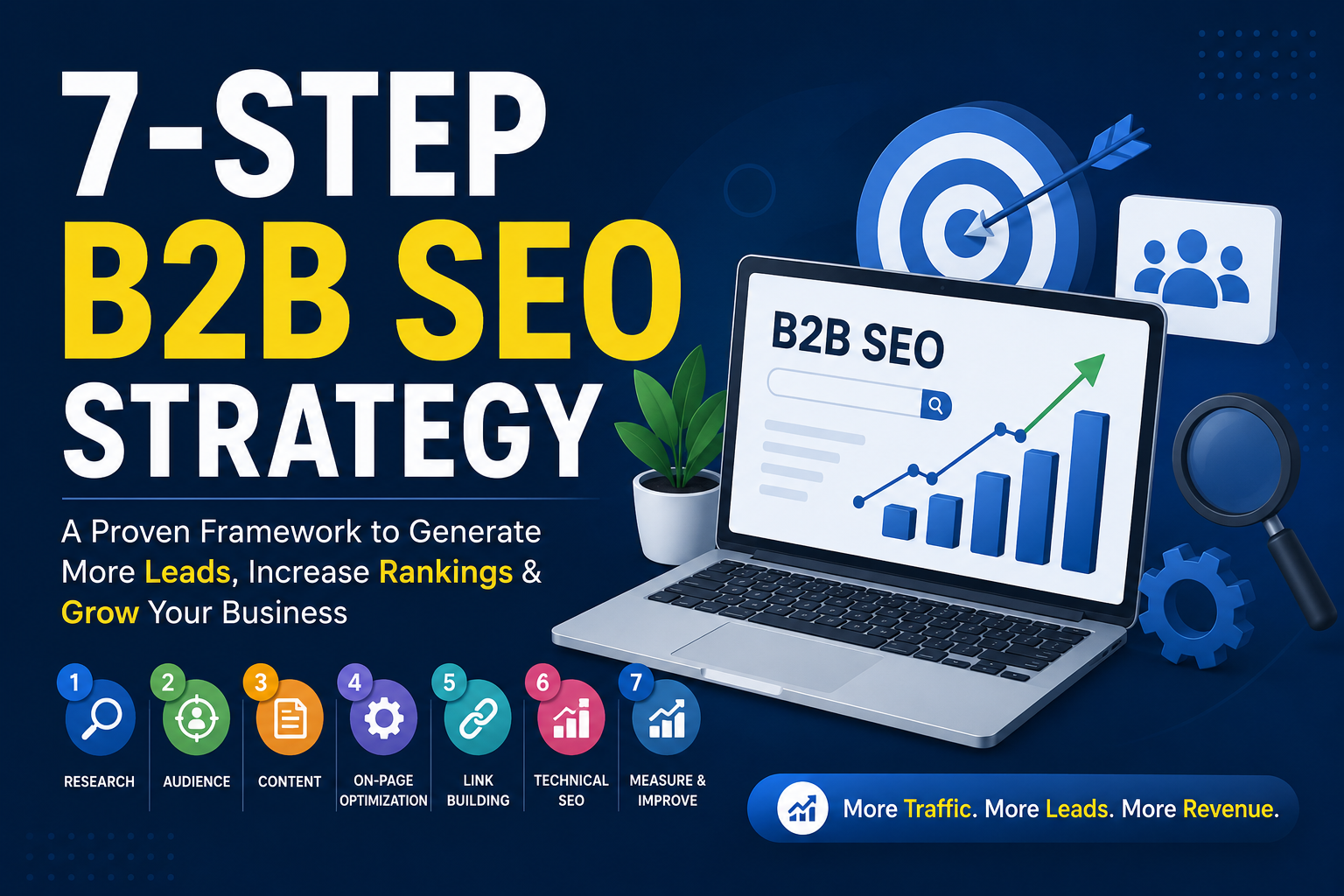
A modern B2B SEO strategy is no longer just about increasing website traffic. It is about attracting the right prospects, building trust throughout the buyer journey, and converting search visibility into measurable revenue. By defining your ideal customer profile, targeting high-intent keywords, creating authoritative content, strengthening technical SEO, building backlinks, optimizing conversions, and continuously measuring results, your business can generate more qualified leads and achieve sustainable growth in 2026. Organizations that embrace both traditional SEO and emerging AI-driven search opportunities will position themselves ahead of competitors and create a powerful engine for long-term revenue generation.
FAQs
1. How long does B2B SEO take to generate results?
Most B2B SEO campaigns begin showing meaningful improvements within 3 to 6 months, while significant revenue impact often occurs between 6 and 12 months.
2. Is SEO still effective for B2B companies in 2026?
Yes. Organic search remains one of the highest ROI marketing channels for B2B businesses, especially when combined with AI visibility strategies.
3. What is the most important step in a B2B SEO strategy?
Understanding your Ideal Customer Profile and targeting high-intent keywords are foundational steps that influence every other aspect of SEO.
4. How does AI impact B2B SEO?
AI affects how buyers discover information, making it important to optimize content for both traditional search engines and AI-generated responses.
5. Which KPI matters most for B2B SEO?
Revenue contribution and qualified lead generation are generally the most valuable indicators of SEO success because they directly reflect business impact.