Many agency owners believe that making hundreds of cold calls every week is the only way to land SEO clients. That might have worked years ago, but today’s buyers behave very differently. Business owners now research agencies online before booking a meeting. They compare reviews, read case studies, visit LinkedIn profiles, and often consume multiple pieces of content before they ever speak to a salesperson. According to recent industry guidance from Search Engine Land, agencies that consistently publish valuable content and demonstrate real expertise often generate warmer leads than agencies relying solely on outbound prospecting.
Think about your own buying behavior. When you need a software tool or a marketing service, do you usually purchase from the first stranger who calls you? Probably not. You search Google, browse LinkedIn, watch YouTube videos, and check reviews. Your potential SEO clients do exactly the same thing.
That is why inbound marketing has become one of the strongest client acquisition strategies for agencies. Instead of interrupting prospects, you attract them by solving their problems before they become customers. Every blog article, LinkedIn post, SEO case study, and free resource becomes a salesperson working for your business 24/7.
The goal is simple: become the agency people discover instead of the agency that chases everyone.
Understand Your Ideal SEO Client
One of the biggest mistakes new agencies make is trying to sell SEO services to everyone. Restaurants, dentists, lawyers, SaaS companies, eCommerce stores, plumbers, real estate agencies—the list never ends. While this sounds like a bigger market, it actually makes marketing much harder.
Businesses prefer specialists over generalists. If your website says, “We help everyone rank on Google,” your message feels weak. Compare that to, “We help dental clinics increase patient bookings through Local SEO.” The second statement instantly creates trust because it addresses a specific audience with a specific outcome.
Choose one niche where you can build expertise. Examples include:
| Industry | Why It Works |
| Dental Clinics | High customer value |
| Law Firms | Competitive SEO budgets |
| Roofing Companies | Strong local search demand |
| Medical Billing | Long-term contracts |
| Real Estate Agencies | Continuous lead generation |
After selecting a niche, develop an offer around measurable outcomes instead of generic SEO tasks. Clients don’t buy backlinks, keyword research, or technical audits—they buy more leads, appointments, and revenue.
Your messaging should always focus on business growth rather than SEO terminology.
Choose One Profitable Niche
The easiest clients to close are those who believe you understand their business better than your competitors.
Instead of creating one generic case study, produce multiple examples within your niche. If you target dentists, publish articles like:
- How Dentists Can Rank #1 on Google Maps
- Local SEO Checklist for Dental Clinics
- Why Dental Websites Lose Patients
- Google Business Profile Tips for Dentists
Suddenly your website starts looking like the go-to resource for that industry.
This strategy also makes referrals much easier because your positioning becomes memorable.
Build an Irresistible Offer
Most SEO agencies sell “Monthly SEO Packages.”
Successful agencies sell outcomes.
Instead of saying:
We provide Technical SEO, Content Marketing and Link Building.
Say:
We help local businesses increase qualified organic leads within six months through data-driven SEO strategies.
Notice the difference?
One describes services.
The other promises business value.
The clearer your outcome, the easier it becomes to generate qualified SEO leads.
Create an SEO Agency Website That Generates Leads
If you’re wondering how to get SEO leads, your own website should be your best-performing sales representative.
Ironically, many SEO agencies have outdated websites, poor page speed, weak content, and almost no calls to action. If you cannot rank your own website or create a compelling online experience, prospects naturally question whether you can do it for them.
Every service page should target one primary keyword while addressing a specific customer problem. Instead of a single “SEO Services” page, create dedicated landing pages for Local SEO, Ecommerce SEO, Technical SEO, SEO Audits, and Industry-Specific SEO. This structure improves both user experience and search visibility.
Publishing educational content consistently is equally important. Recent agency guidance highlights content marketing as one of the strongest long-term channels for attracting qualified SEO prospects because it builds trust before a sales conversation even begins.
Your website should also include:
- Case studies
- Client testimonials
- Clear pricing (or starting prices)
- Calendar booking link
- Lead magnet
- Frequently Asked Questions
- Contact forms on every service page
A visitor should never wonder what to do next.
Optimize Your Service Pages
Every service page should answer questions like:
- What problem does this service solve?
- Who is it for?
- What results can clients expect?
- How long does SEO usually take?
- Why should they choose your agency?
Include screenshots, rankings, traffic growth, and real business results whenever possible.
Trust converts better than promises.
Publish Helpful Blog Content
The fastest-growing agencies don’t just sell SEO.
They teach SEO.
Educational content attracts business owners who are actively searching for solutions. Even if they decide not to implement everything themselves, they’ll remember the agency that provided genuine value.
Examples include:
- Local SEO guides
- Google Business Profile optimization
- Technical SEO tutorials
- AI SEO strategies
- SEO pricing guides
- SEO mistakes to avoid
Every article becomes another opportunity to generate inbound leads while strengthening your authority.
How to Get SEO Clients on LinkedIn
When agency owners ask how to get SEO clients on LinkedIn, they often expect a secret outreach template or a magic automation tool. The truth is much simpler: LinkedIn rewards credibility, consistency, and genuine engagement. Decision-makers receive dozens of cold pitches every week, so another generic message saying, “Hi, I can help you rank #1 on Google,” is unlikely to stand out. Instead, your goal should be to become someone they already recognize before you ever start a conversation.
Think of LinkedIn as a networking event rather than a sales floor. Business owners follow people who regularly share useful insights, practical advice, and real-world results. If your profile consistently demonstrates expertise, your audience begins to associate your name with SEO. By the time you send a message—or when they need SEO services—they’re far more likely to respond because trust has already been established.
A simple weekly content plan can make a significant difference:
| Day | Content Idea |
| Monday | SEO Tip or Myth-Busting Post |
| Tuesday | Client Success Story or Mini Case Study |
| Wednesday | Google Search or AI Search Update |
| Thursday | Website Audit Breakdown |
| Friday | Personal Business Lesson or Behind-the-Scenes |
| Saturday | Industry Poll or Question |
| Sunday | Weekly SEO Recap or Carousel |
This type of consistency keeps your profile active and helps attract both followers and inbound inquiries. Over time, these posts become a portfolio of expertise that works around the clock.
Optimize Your LinkedIn Profile
Your LinkedIn profile is more than an online résumé—it is your landing page. Every visitor should immediately understand who you help, what you do, and why they should trust you. Replace generic headlines like “SEO Expert” with outcome-driven statements such as:
Helping Local Businesses Generate More Leads Through SEO & Google Business Profile Optimization.
Use a professional profile photo, a branded banner, and a compelling “About” section that focuses on client outcomes rather than your job history. Showcase certifications, featured articles, testimonials, case studies, and links to your website. Social proof plays a major role in purchasing decisions, and your profile should reinforce your credibility at every step.
Create Authority Content
People buy from experts they trust. The easiest way to demonstrate expertise is by consistently publishing valuable content. Instead of talking about yourself, answer the questions your ideal clients are already asking.
For example, you could publish posts like:
- Why Most Local Businesses Fail at SEO
- Three Website Mistakes That Hurt Google Rankings
- How AI Is Changing Search in 2026
- Before-and-After SEO Results from a Recent Client
- Free Website Review with Actionable Improvements
The objective isn’t to go viral. It’s to become memorable to the right audience. A business owner who repeatedly sees your helpful content is much more likely to contact you when they’re ready to invest in SEO.
Engage Before You Pitch
One of the biggest mistakes agencies make is connecting with someone and immediately sending a sales message. A better approach is to build familiarity first. Follow your target prospects, comment thoughtfully on their posts, congratulate them on company milestones, and share insights that add value to the conversation.
After a few meaningful interactions, reaching out feels natural rather than intrusive. Your message can simply reference a recent post or business update before offering a helpful suggestion. This approach dramatically increases response rates because it starts a conversation instead of forcing a sales pitch.
Build a Referral Engine
Referrals remain one of the highest-converting lead sources for SEO agencies. A recommendation from someone a prospect already trusts removes much of the skepticism that often surrounds digital marketing services. Instead of constantly searching for new clients, build systems that encourage satisfied customers to introduce you to others.
After delivering measurable results, ask clients if they know another business that could benefit from similar improvements. Make the process easy by providing a short introduction template they can forward or by offering a referral incentive such as a discounted month of SEO or an additional service.
Referrals don’t have to come only from clients. Accountants, photographers, branding consultants, IT companies, and business coaches all work with companies that may need SEO. Building relationships with complementary professionals can create a steady stream of warm introductions.
Partner With Web Designers & Developers
Web designers and developers regularly complete projects for businesses that need more traffic after launching their new websites. While they excel at design and development, many don’t provide SEO as a core service. This creates an excellent partnership opportunity.
Reach out to local design agencies, freelancers, branding firms, and software companies with a simple proposal: you’ll handle SEO while they continue focusing on development. In return, they receive either a referral fee or the confidence that their clients are receiving a complete digital solution.
This type of partnership benefits everyone involved:
- Clients receive both a high-quality website and ongoing SEO.
- Designers increase customer satisfaction.
- Your agency gains consistent referral opportunities without spending money on advertising.
Long-term partnerships often become more valuable than one-off client acquisitions because they generate recurring business over time.
Use Google Business Profile for Local Clients
If your agency serves local businesses, your Google Business Profile (GBP) can become one of your strongest lead-generation assets. When someone searches for phrases like “SEO agency near me“ or “SEO company in Faisalabad“, your profile may appear before traditional search results.
Optimize every element of your listing:
- Choose accurate business categories.
- Upload professional office or team photos.
- Collect authentic customer reviews.
- Respond to every review.
- Publish regular updates and offers.
- Add frequently asked questions.
An active and well-optimized Google Business Profile builds trust before prospects even visit your website. It also reinforces your expertise—after all, if you can’t optimize your own local presence, potential clients may question your ability to optimize theirs.
Offer Free SEO Audits
A free SEO audit remains one of the most effective lead magnets because it provides immediate value. Rather than promising vague improvements, show prospects exactly where they’re losing traffic, rankings, or conversions.
A useful audit should cover:
| Audit Area | What to Review |
| Technical SEO | Site speed, indexing, Core Web Vitals |
| On-Page SEO | Titles, meta descriptions, headings |
| Local SEO | Google Business Profile optimization |
| Content | Keyword targeting, content gaps |
| Backlinks | Authority and toxic links |
| User Experience | Navigation and mobile usability |
Avoid overwhelming prospects with dozens of technical issues. Highlight the three to five improvements that will likely produce the biggest business impact. Finish by explaining how your agency can help implement those recommendations.
This approach positions you as a problem-solver rather than someone simply trying to sell a monthly package.
Collect Case Studies & Testimonials
One of the fastest ways to convince a potential client is to show that you’ve already achieved results for someone else. Business owners don’t just want promises—they want proof. That’s why case studies are among the most powerful marketing assets for any SEO agency. A well-documented case study demonstrates your strategy, execution, and measurable outcomes, making it easier for prospects to trust your expertise.
Instead of simply saying, “We improved rankings,” tell a complete story. Explain the client’s initial challenges, the SEO strategy you implemented, the timeline, and the final results. Include screenshots from tools like Google Search Console or Google Analytics (with permission), keyword ranking improvements, organic traffic growth, and lead generation metrics. Even if your first clients are small local businesses, documenting their success can significantly improve your credibility.
Testimonials are equally valuable. Ask satisfied clients for a short written review or a video testimonial discussing their experience. Display these testimonials prominently on your homepage, service pages, LinkedIn profile, and proposal documents. The more authentic social proof you provide, the easier it becomes for potential clients to visualize working with your agency.
A simple structure for an SEO case study looks like this:
| Section | Details |
| Client Background | Industry, size, and business goals |
| Challenge | SEO problems before working with you |
| Strategy | Technical SEO, content, local SEO, link building |
| Results | Traffic growth, rankings, leads, revenue |
| Client Feedback | Testimonial or review |
Remember, prospects are looking for confidence. Real-world results speak louder than marketing claims.
Create Lead Magnets
If you’re wondering how to get SEO leads consistently, offering a valuable lead magnet is one of the smartest long-term strategies. A lead magnet is a free resource that solves a specific problem in exchange for a visitor’s email address. Instead of asking people to contact you immediately, you provide something useful first, building trust before making a sales offer.
Examples of effective SEO lead magnets include:
- Free Website SEO Audit Checklist
- Local SEO Checklist for Small Businesses
- 50 Common SEO Mistakes eBook
- SEO Content Planning Template
- Google Business Profile Optimization Guide
- Keyword Research Workbook
- Monthly SEO Performance Report Template
The best lead magnets address a real pain point. For example, if you target dentists, create a guide titled “10 Local SEO Mistakes That Cost Dental Clinics New Patients.” If you serve eCommerce businesses, offer a checklist for improving product page SEO.
Once someone downloads your resource, they’re already interested in SEO. That makes them a much warmer lead than someone receiving an unsolicited cold call. Over time, your lead magnet becomes a scalable system that generates qualified prospects every month.
Build an Email Nurture System
Collecting email addresses is only the beginning. To convert subscribers into paying clients, you need a simple email nurture sequence that keeps your agency top of mind while continuing to provide value.
A basic five-email sequence might look like this:
| Purpose | |
| Welcome Email | Deliver the promised lead magnet and introduce your agency |
| Educational Email | Share practical SEO tips that readers can implement |
| Case Study | Showcase a real client success story with measurable results |
| Common Mistakes | Explain SEO pitfalls and how to avoid them |
| Call-to-Action | Invite readers to book a free consultation or SEO audit |
The key is to educate rather than constantly sell. Helpful emails build trust, while aggressive sales emails often lead to unsubscribes. By consistently sharing insights, updates, and success stories, your subscribers begin to view your agency as a reliable resource. When they’re ready to invest in SEO, you’ll already have a relationship with them.
Mistakes to Avoid
Even experienced agency owners make mistakes that slow down client acquisition. Recognizing these common pitfalls can save months of frustration.
Trying to Serve Everyone
Specialization builds authority. Agencies focused on one or two industries often outperform generalists because their messaging is more relevant and their case studies are more compelling.
Selling Features Instead of Outcomes
Clients don’t buy keyword research or backlinks—they buy more qualified leads, appointments, and revenue. Always connect your services to business results.
Ignoring Personal Branding
People trust people more than logos. Publishing educational content, speaking at events, and actively engaging on LinkedIn can make your personal brand one of your strongest marketing assets.
Inconsistent Content
Publishing three blog posts in one week and then disappearing for two months won’t produce sustainable results. Consistency is far more important than intensity.
No Follow-Up Process
Many leads don’t convert immediately. Some prospects need weeks or months before they’re ready to invest. Following up professionally and consistently keeps your agency in consideration without becoming intrusive.
Avoiding these mistakes helps create a predictable and repeatable client acquisition system.
Conclusion
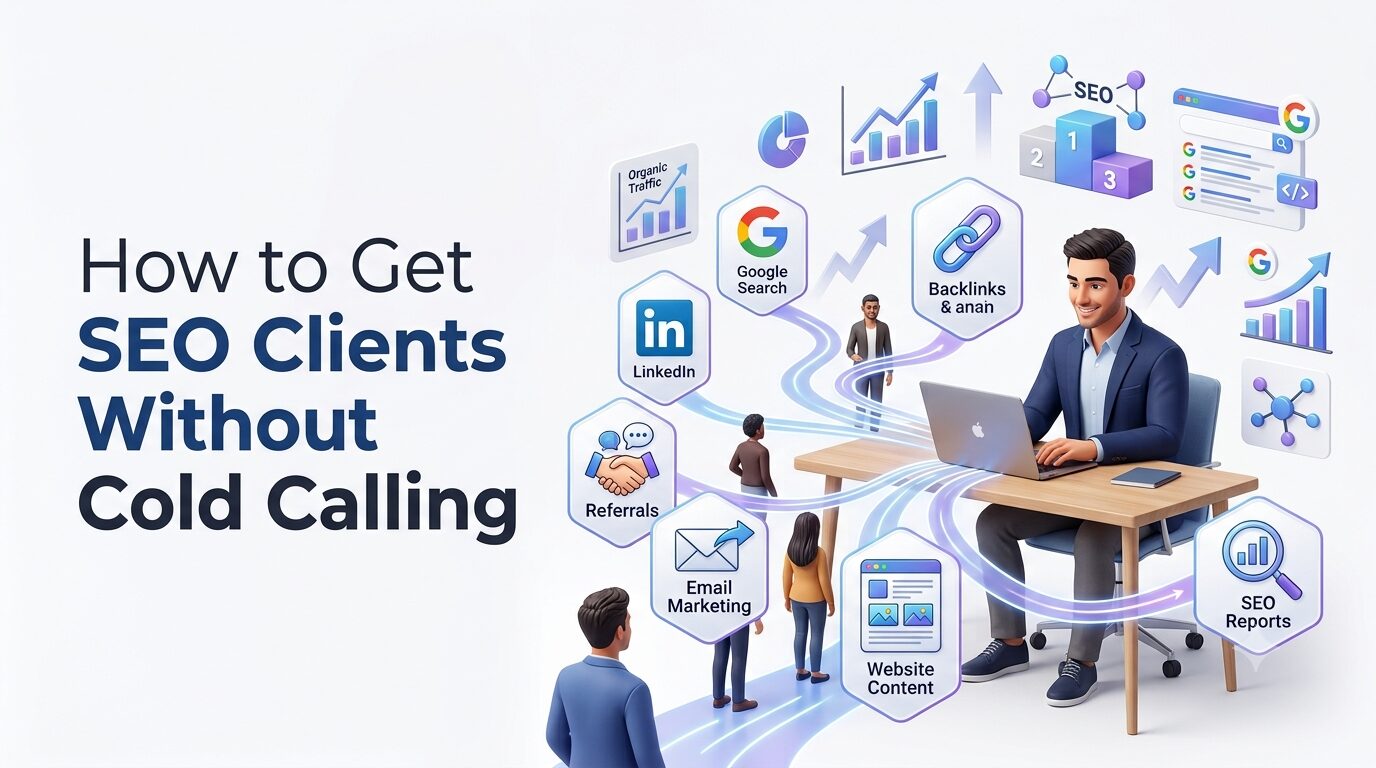
Getting SEO clients without cold calling is no longer just possible—it’s becoming the preferred approach for many successful agencies. Today’s business owners want to work with professionals who demonstrate expertise before asking for a sale. By building a niche-focused website, publishing valuable content, optimizing your LinkedIn presence, collecting case studies, encouraging referrals, creating lead magnets, and nurturing prospects through email, you create multiple channels that continuously attract qualified leads.
The biggest advantage of this strategy is sustainability. Cold calling requires constant effort, while inbound marketing compounds over time. Every article you publish, testimonial you collect, LinkedIn post you share, and referral you receive strengthens your reputation and expands your reach. Instead of chasing every opportunity, you’ll begin attracting businesses that already trust your expertise.
Success won’t happen overnight, but consistency pays off. Commit to producing valuable content, documenting client wins, and building genuine relationships. Over the coming months, you’ll develop an acquisition system that generates a steady flow of SEO clients—without relying on endless cold calls.
Frequently Asked Questions (FAQs)
1. What is the fastest way to get SEO clients without cold calling?
The fastest approach is to combine LinkedIn personal branding, referrals, free SEO audits, and niche-specific case studies. These methods help establish credibility and attract warmer prospects.
2. How can I get SEO clients on LinkedIn?
Optimize your profile, publish valuable SEO content consistently, engage with your target audience, and build relationships before sending any sales messages. Trust comes before conversion.
3. How do I generate SEO leads for my agency?
Create SEO-focused blog content, rank your own website, offer free lead magnets, optimize your Google Business Profile, collect referrals, and use email marketing to nurture prospects over time.
4. Do I need paid advertising to get SEO clients?
No. While paid ads can accelerate growth, many agencies successfully generate clients through content marketing, search engine optimization, LinkedIn networking, partnerships, and referrals.
5. How long does it take to build a consistent flow of SEO clients?
Results depend on your consistency and niche, but agencies that regularly publish quality content, build authority, and nurture leads often begin seeing steady inbound inquiries within three to six months.