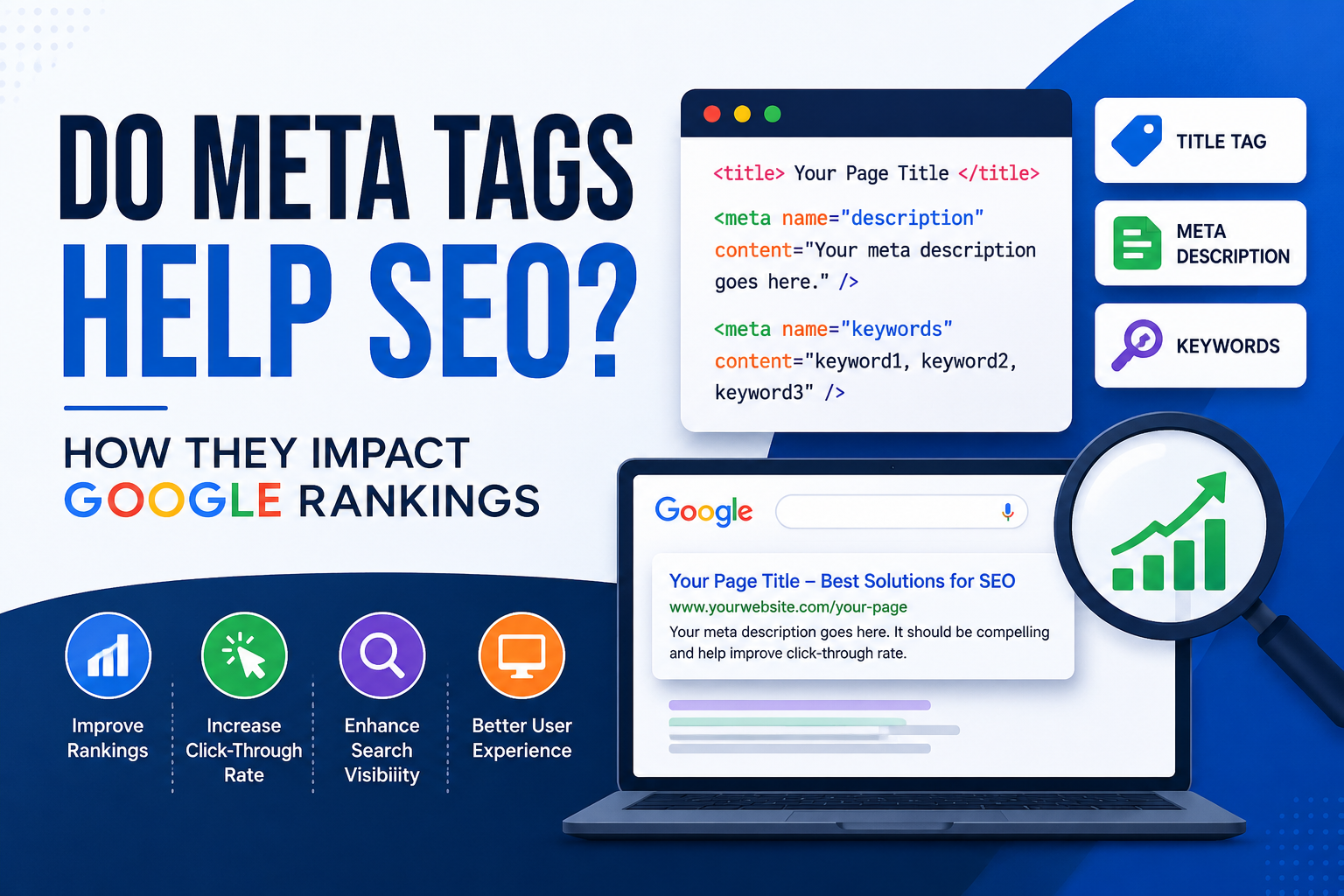

When you search Google for a product, recipe, review, event, or other specific type of information, you may notice that some results look much more informative than others. Instead of showing only a page title, URL, and description, certain listings can display ratings, prices, availability, review information, images, or other enhanced details. Identify the image duplication. These enhanced appearances are commonly associated with rich snippets, although Google increasingly uses the broader term rich results for many of these search features. Naturally, this raises an important SEO question: do rich snippets help SEO, or are they simply an attractive way of displaying information in Google’s search results?
The answer is a little more nuanced than a simple yes or no. Rich snippets do not function as a direct ranking boost that automatically pushes a webpage above competitors. Google explains that structured data can help its systems understand page content and make pages eligible for supported rich-result features, but eligibility does not guarantee that an enhancement will actually appear. The real opportunity is that a richer search presentation can make a result more informative and potentially more compelling to searchers. In other words, rich snippet SEO is less like pressing a “rank higher” button and more like improving the storefront through which people discover your website.
What Are Rich Snippets in SEO?
Rich snippets in SEO are enhanced search-result presentations that can provide users with additional information about a webpage beyond the traditional title, URL, and descriptive snippet. Depending on the content type and the search feature involved, Google may show information such as ratings, reviews, prices, availability, event details, recipe information, or other structured attributes. For example, eligible product pages can provide information about products, including details connected with offers, ratings, or reviews. Google’s current Product structured-data documentation explains that required properties and specific eligibility requirements depend on the search experience being targeted. This makes rich results particularly useful when the additional information helps a searcher understand whether a result matches their needs before they click.
The phrase snippet in SEO can sometimes cause confusion because every ordinary Google result has a snippet, but not every snippet is a rich result. A standard snippet is Google’s normal preview of a webpage, while a rich result is an enhanced search appearance generated when Google’s systems determine that the page qualifies for a supported feature. Structured data plays an important role because it gives search engines machine-readable information about entities and content on a page. However, adding markup is not a guarantee of a special search appearance. Google explicitly states across its structured-data documentation that valid structured data can make a page eligible for certain rich results, but Google ultimately decides whether and how those features appear.
Rich Snippets vs. Standard Search Snippets
The easiest way to understand the difference is to imagine two books sitting on a shelf. The standard result is like a book showing its title, author, and a short description. A richer result can provide extra information that helps you decide whether that book is worth picking up, such as a rating or other relevant details. The standard snippet can still be highly effective because Google’s systems generate it based on the page and query, but enhanced search features can give users additional context when the content type supports them. This distinction matters because many SEO discussions incorrectly suggest that simply adding schema markup will transform every search listing into a visually enhanced result.
Another important point is that rich snippets are not the same as structured data. Structured data is the underlying machine-readable markup that can communicate information about your content. A rich result is the search appearance Google may generate after interpreting eligible information. You can therefore have structured data on a page without seeing a rich result in Google’s search results. Google notes that several factors can affect whether a rich result appears, including compliance with guidelines, technical validity, supported search features, and Google’s own systems.
How Do Rich Snippets Work?
Rich snippets begin with information that already exists on a webpage. Website owners can add structured data using supported vocabulary and formats so search engines can better interpret what the page represents. Think of structured data as labels attached to the different objects in a room: instead of asking a search engine to infer everything from surrounding words, the markup provides clearer machine-readable context. For a product page, for instance, structured data can identify the product name and provide eligible offer, review, or rating information. Google’s documentation explains that required properties must be present for a page to be eligible for particular rich-result experiences.
Once Google discovers the structured data, its systems can process the information during crawling and indexing. If the markup is technically valid and follows Google’s guidelines, the page may become eligible for a supported rich result. But eligibility is only one part of the process. Google does not promise that every eligible page will receive the enhanced appearance, which means SEOs should never treat structured data implementation as a guaranteed search-result change. Google’s review-snippet documentation, updated in July 2026, continues to emphasize that Google does not guarantee that features consuming structured data will appear in search results.
The Role of Structured Data
Structured data is particularly valuable because search engines need to interpret information at scale. Humans can look at a page and understand that “$49.99” is a product price, “4.8” represents a rating, and “In stock” indicates availability. A search engine needs structured signals to help distinguish those concepts reliably. Schema.org vocabulary and Google’s supported structured-data features provide a standardized way to communicate many of these relationships, allowing eligible pages to participate in enhanced search experiences.
That does not mean you should add every possible schema type to every page. The best approach is to identify what the page actually represents and implement only relevant structured data. Google’s guidance stresses that structured data should match the content users can see on the page, and Google has reiterated this principle when discussing both traditional search and AI-powered search experiences. The goal is accuracy, not markup volume. A small amount of precise structured data is far more useful than a large amount of irrelevant or misleading markup.
Do Rich Snippets Help SEO?
So, do rich snippets help SEO? Yes, but primarily through indirect SEO benefits rather than a direct ranking boost. A rich result can make a search listing more informative, visually distinctive, and useful to searchers. When the enhanced presentation aligns with search intent, users may be more likely to notice and select the result. That potential increase in search-result engagement is why marketers often include rich snippet SEO within broader organic-search strategies.
However, it is important not to confuse correlation with causation. If a page earns a rich result and later receives more clicks, that does not mean Google has automatically awarded it a ranking advantage because of the markup. Google’s documentation consistently frames structured data as a way to make pages eligible for supported search features rather than as a direct ranking mechanism. Your rankings still depend on the many systems Google uses to evaluate relevance, quality, usefulness, technical accessibility, and other search factors.
Why Rich Snippets Are Not a Direct Ranking Factor
Imagine you own two restaurants. One has a beautifully designed menu, while the other has an ordinary printed menu. A better menu can help customers understand the food and choose what they want, but the menu itself does not magically make the restaurant better. Rich snippets work in a similar way. They can improve how information is presented in search, but they do not replace the underlying quality and relevance of the webpage.
This distinction is especially important for SEO campaigns because businesses sometimes spend too much time chasing schema markup while neglecting content quality. If your page does not satisfy search intent, adding Product, Review, FAQ, or other structured data will not solve the fundamental problem. Google’s current search guidance continues to emphasize making content useful and ensuring that structured data accurately reflects visible page information. Structured data should therefore be treated as an enhancement layer on top of sound SEO rather than as a shortcut around it.
Benefits of Rich Snippets for SEO
One of the biggest advantages of rich snippets is that they can make search results easier to understand at a glance. A searcher scanning a page of results may immediately notice useful information such as a product price, rating, or other relevant attributes. That extra context can reduce uncertainty and help users decide which result is most relevant to their query. The benefit is particularly strong when the additional information answers an important part of the user’s question before they even visit the website.
For example, someone searching for a product may want to know whether an item is available and how much it costs. If an eligible result provides relevant product information directly in the search experience, the user can make a faster decision about which page deserves attention. Google’s Product structured-data documentation specifically describes enhanced product information that can include reviews, ratings, price, and availability depending on the search experience and markup used. The result is not necessarily a higher ranking, but potentially a more useful presentation.
Improve Search Visibility and Click Potential
Rich results can increase the visual prominence of a search listing because they provide information beyond the basic result format. This can be valuable in competitive SERPs where multiple pages have similar titles and descriptions. If your result communicates something meaningful that competing results do not display, a searcher may find your listing more appealing. Still, the effect varies significantly by query, industry, device, search intent, and the specific search feature Google chooses to display.
This is why you should think about click potential rather than promise a guaranteed CTR increase. Search Console allows website owners to examine clicks, impressions, CTR, queries, pages, and other dimensions of search performance. If a page receives substantial impressions but comparatively few clicks, an enhanced result may be one area worth investigating alongside title tags, descriptions, search intent, and content quality. The data should guide the decision rather than assumptions about what rich snippets “always” do.
Help Search Engines Understand Content
Another major benefit is improved machine-readable context. Search engines can often understand webpages without structured data, but structured information can make important entities and relationships more explicit. Consider a product page containing the words “Apple,” “$799,” “4.7 stars,” and “available now.” A human can interpret those details quickly, while structured data can explicitly identify the product, rating, offer, price, and availability relationships.
That clarity can help Google’s systems process eligible content for supported search features. Google describes structured data as useful for communicating information about content in a machine-readable format and making pages eligible for certain search features and rich results. The key word is eligible. Structured data improves the information architecture of the page for machines, but it does not guarantee that Google will display every marked-up property in every search.
SEO Rich Text Meaning Explained
The SEO rich text meaning is frequently misunderstood because “rich text” and “rich snippets” describe different things. Rich text usually refers to content formatting that includes elements such as headings, bold or italic text, links, lists, images, tables, and other presentation features. It is primarily concerned with how information is formatted for people reading a webpage. Rich snippets, by contrast, describe enhanced information that may appear in search results.
This distinction becomes important when someone searches for what is SEO rich text and expects a definition related to schema markup. Richly formatted content on a webpage does not automatically create a rich result in Google. Similarly, structured data does not mean that the webpage itself needs to look visually different to the visitor. Structured data is often embedded in a way that users do not directly notice, while its purpose is to communicate information to search engines.
What Is SEO Rich Text?
When people use the phrase SEO rich text, they may mean content that is well formatted, semantically organized, and easy for both users and search engines to understand. In that broader sense, rich text can support SEO because clear headings, descriptive links, organized information, and readable formatting improve the usability of a page. But it should not be confused with a rich search result.
A useful way to separate the concepts is to remember three layers: content, structured data, and search appearance. Your content provides the information users need. Structured data provides machine-readable context about eligible information. Google’s search systems then determine how the page may appear in search. Keeping those layers separate makes it much easier to build an accurate SEO strategy instead of chasing terminology.
Common Types of Rich Results
Google supports different structured-data-driven search experiences for different content types, and the available search features can change over time. Product-related pages, review content, events, recipes, organizations, profiles, and other types of pages may have specific structured-data opportunities depending on Google’s current documentation and eligibility requirements. For example, Google currently documents product snippets and merchant listings separately because their requirements and intended search experiences differ.
Review snippets are another example. Google explains that valid review or rating markup may allow a search result to display a review snippet containing ratings and other review information. The current documentation also specifies eligible content types and guidelines for review markup. This illustrates an important SEO principle: schema should be selected according to the actual content and the specific search feature you are trying to qualify for, not simply because a particular markup type is popular.
Search features can also evolve. For example, Google’s Search Console documentation currently notes that FAQ rich results stopped appearing in Google Search beginning May 7, 2026, which demonstrates why SEOs should avoid relying on old schema strategies without checking current documentation. A markup type that was once widely discussed may no longer provide the same search appearance it did in previous years. That’s why snippet SEO in 2026 requires ongoing monitoring rather than a “set it and forget it” approach.
Rich Snippet SEO Best Practices for 2026
The first rule of rich snippet SEO is simple: mark up what your page genuinely contains. If a page is about a product, use appropriate product-related structured data when the page meets Google’s requirements. If the page contains genuine review information that qualifies under Google’s guidelines, use the appropriate review markup. Never choose schema based solely on the search appearance you want.
Accuracy is more important than quantity. Adding dozens of properties does not necessarily make your page more eligible or valuable. In fact, inaccurate or misleading structured data can create problems and may prevent Google from using the markup. Google’s documentation warns that violations of structured-data guidelines can lead to manual actions, and structured data can be ignored when a manual action is applied.
Keep Structured Data Accurate and Visible
Your markup should accurately represent information available to users on the page. This is one of the most important principles in modern structured-data implementation. If your markup says a product costs $49.99 but the visible page says $69.99, you have created a mismatch that can undermine trust and compliance. Google specifically advises that structured data should match visible content, including when structured data is used in relation to newer AI search experiences.
The same principle applies to reviews. Do not invent ratings, copy ratings from unrelated sources, or mark up information that users cannot verify on the page. Google’s review documentation includes specific eligibility and guideline requirements, and violating them can have consequences beyond simply failing to receive a rich result. Treat structured data as factual metadata, not as advertising space.
Test and Monitor Your Markup
Testing should be part of your implementation process. Google’s Rich Results Test can help you determine whether supported structured data can be detected and whether the markup contains issues relevant to rich-result eligibility. Search Console also provides rich-result reports that show valid and invalid structured-data items for supported types.
Monitoring is equally important after deployment. Websites change, product inventories update, templates get redesigned, and plugins can modify schema automatically. A markup implementation that worked six months ago can develop errors after a technical change. Search Console’s rich-result reports can help identify critical issues and validate fixes, while the Performance report can help you evaluate search traffic and CTR over time.
Common Rich Snippet SEO Mistakes
One of the most common mistakes is assuming that valid structured data guarantees a rich result. It does not. Google explicitly says that features consuming structured data are not guaranteed to appear in search results, even when the markup is valid. If a rich result does not appear immediately after implementation, that does not necessarily mean the markup is broken.
Another mistake is marking up content that users cannot see. Structured data should not be used to tell Google something that is completely absent from the visible webpage. This is particularly dangerous with ratings, prices, availability, event information, and other facts that can change. Google’s guidance emphasizes consistency between structured data and visible content.
A third mistake is using schema as a replacement for SEO fundamentals. You still need useful content, logical information architecture, crawlable pages, relevant titles, strong internal linking, good technical performance, and content that satisfies the user’s search intent. Structured data cannot transform an irrelevant page into a useful one. It is an amplifier of clarity, not a substitute for substance.
Other common problems include incorrect syntax, missing required properties, outdated implementations, fake reviews, and irrelevant markup. Google’s Search Console provides separate reports for rich-result issues and unparsable structured data, making it possible to identify technical problems that prevent markup from being understood.
How to Measure Rich Snippet Performance

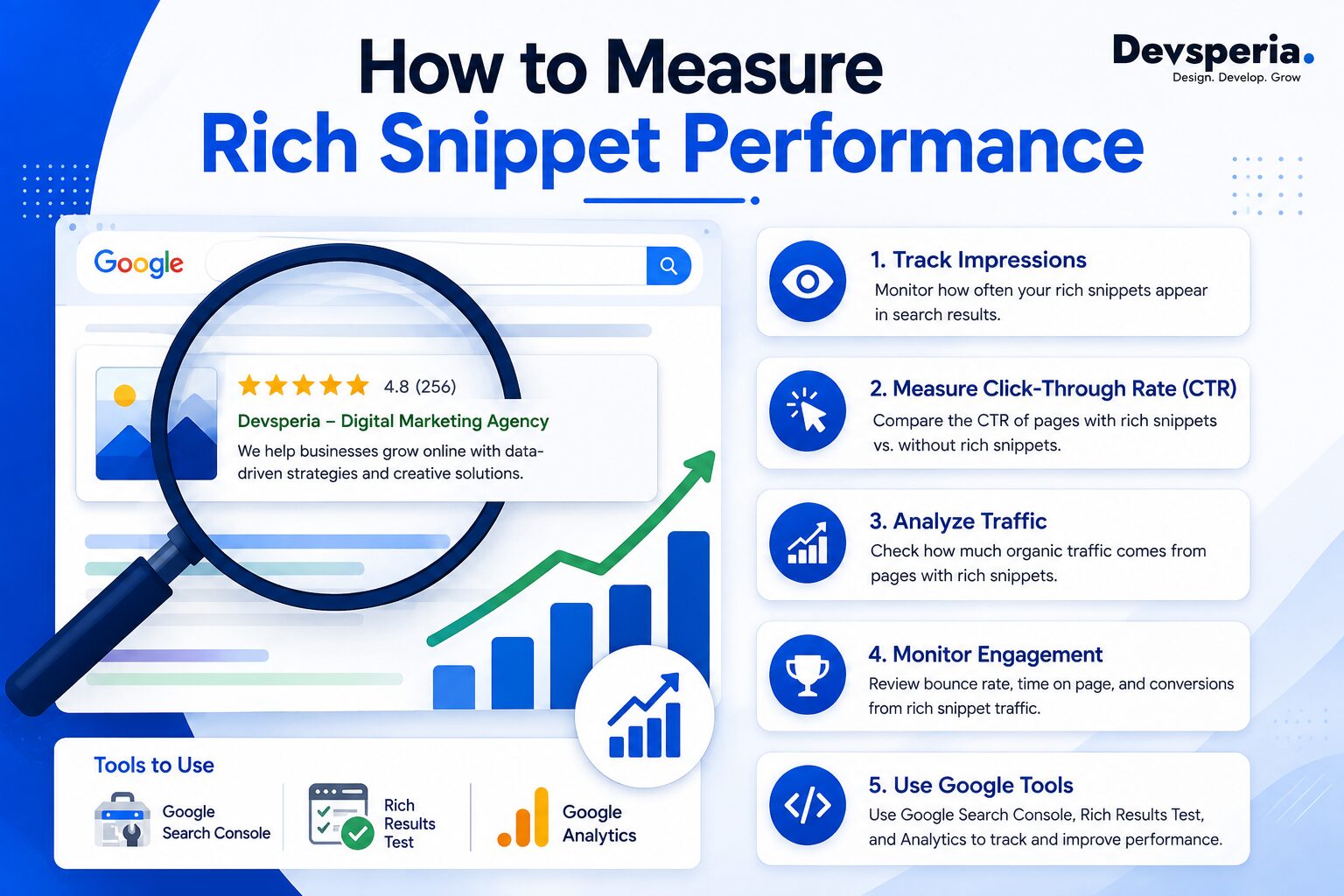
If you want to know whether rich snippets are helping your website, do not rely on appearances alone. Search Console provides performance information that can help you analyze clicks, impressions, CTR, queries, pages, and search appearance data. This allows you to move from speculation to measurement.
Start by identifying pages that are eligible for a specific rich-result type. Record their impressions, clicks, CTR, and average position before and after implementation where the comparison is meaningful. Then monitor whether the search appearance changes and whether organic engagement changes alongside it. Remember that many variables can influence SEO performance at the same time, so avoid claiming that structured data alone caused every change.
Search Console also has rich-result reports that show valid and invalid structured-data items and can help track how structured-data changes affect rich-result impressions for supported reports with an impressions overlay. This is especially useful for larger websites where manually checking individual search results would be impractical.
A good measurement framework might look like this:
| Metric | What It Tells You |
| Impressions | How often your pages appeared in Google Search |
| Clicks | How much organic traffic the search results generated |
| CTR | How frequently users clicked after seeing your result |
| Average position | The average reported ranking position |
| Search appearance | Whether specific enhanced search features were recorded |
| Structured-data errors | Whether technical or guideline-related issues exist |
One subtle point is that Search Console’s search-appearance data needs careful interpretation. Google explains that when filtering by search appearance, clicks are assigned to the URL rather than necessarily to the individual feature that attracted the click. So if you see a rich-result appearance and clicks increase, treat that as useful evidence, but do not assume every click was caused specifically by the rich-result enhancement.
Conclusion
So, do rich snippets help SEO in 2026? They can, but the benefit is primarily indirect. Rich snippets and other rich results can make eligible search listings more informative, improve how your content is presented, and potentially increase the likelihood that a searcher chooses your result. They can also help Google interpret structured information about your page, which may make the page eligible for supported search features.
The important thing is not to treat rich snippet SEO as a shortcut to higher rankings. Structured data does not guarantee a rich result, and a rich result does not automatically mean a ranking boost. Your foundation should still be helpful content, strong search intent alignment, technical SEO, crawlability, clear page structure, and a good user experience.
If you are implementing structured data today, start with accuracy. Use only relevant schema, make sure your markup reflects visible content, follow Google’s current guidelines, test your implementation, and monitor the results through Search Console. Google’s current documentation shows that search features can change—for example, FAQ rich results stopped appearing in Google Search in May 2026—so successful SEO requires keeping your strategy aligned with current search behavior rather than relying on outdated tactics.
Ultimately, the best way to think about rich snippets is simple: they enhance a strong SEO strategy; they do not replace one. When useful structured data, excellent content, and genuine search intent alignment work together, your pages have a better chance of delivering a search result that is both understandable to Google and compelling to users.
FAQs About Rich Snippets and SEO
1. Do rich snippets directly improve Google rankings?
No. Rich snippets are not a guaranteed direct ranking boost. Structured data can make a page eligible for certain rich-result features, but Google decides whether those features appear.
2. Can rich snippets increase organic CTR?
They can potentially increase click-through potential because enhanced results may provide useful information that makes a listing more noticeable or informative. However, there is no universal CTR increase, so performance should be measured using actual Search Console data.
3. Is structured data the same as a rich snippet?
No. Structured data is machine-readable markup added to a webpage, while a rich result is an enhanced search appearance that Google may generate from eligible information. A page can have valid structured data without receiving a rich result.
4. Does every page need schema markup?
No. You should use structured data when it accurately describes the page and the markup is relevant to a supported search feature. Adding irrelevant schema simply to obtain a particular appearance is not a good SEO strategy.
5. How can I check whether my structured data is working?
Use Google’s Rich Results Test to test supported markup and Google Search Console to monitor rich-result reports, errors, and search performance. Search Console can show valid and invalid structured-data items and help you track relevant search-result performance over time.