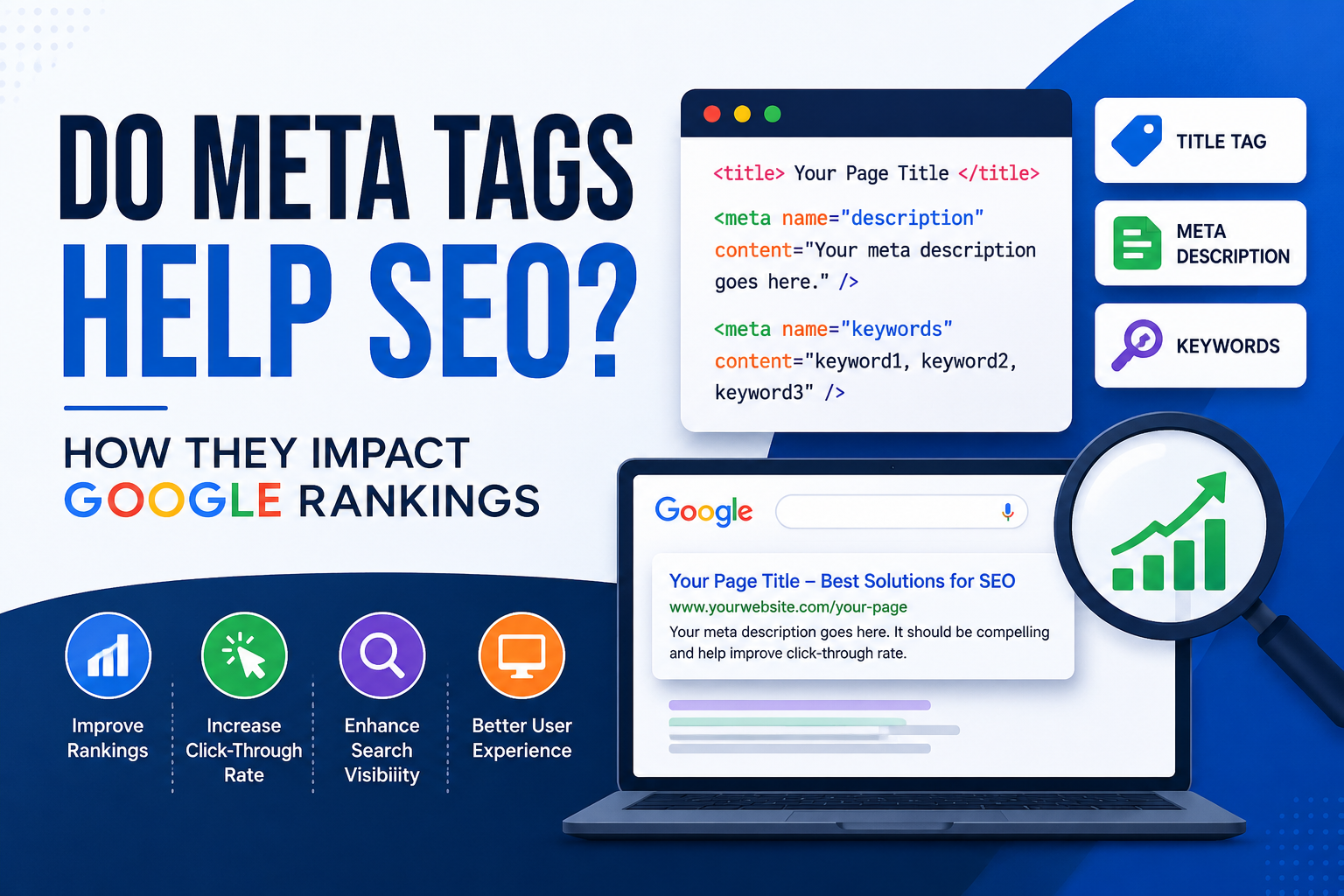
If you have ever optimized a website, you have probably heard that meta tags are important for SEO. But do they actually help pages rank higher on Google, or are they simply an old-school optimization technique that no longer matters? The answer is a little more nuanced than a simple yes or no. Some meta tags can directly control whether Google indexes a page, while others help Google understand and present your content in search results. At the same time, certain tags that were once popular, especially meta keywords, have no ranking value in Google Search today.
Think of metadata as the information label on a product package. The label does not change the product itself, but it helps people understand what they are looking at and decide whether it is relevant. In a similar way, good website metadata can improve how your pages are interpreted and displayed. Google’s current documentation confirms that it supports specific meta tags, including descriptions and robots directives, while unsupported tags are simply ignored.
What Are Meta Tags and Why Do They Matter?
Meta tags are pieces of HTML code that provide information about a web page to search engines, browsers, and other systems. They are usually placed inside the <head> section of a page and are not normally visible to visitors. When people talk about metadata and SEO, they often mean elements such as the page title, meta description, robots instructions, and other information that helps search engines process a page.
A meta search meaning can be understood as information used to describe or control how content is handled in search. However, not every piece of metadata carries the same weight. Google specifically supports certain meta tags and ignores others that do not serve its indexing systems. This is why blindly adding dozens of custom meta tags is not an SEO strategy. The goal should always be to use metadata that has a clear purpose for users or search engines.
Meta Keywords Definition and Their Historical Role
The meta keywords definition is simple: it was an HTML tag that allowed website owners to list words and phrases they believed described a page. In the early days of search engines, site owners often separated these terms using meta keywords commas and hoped that the list would help pages rank for those phrases. This led to widespread manipulation, with websites stuffing unrelated keywords into their metadata.
Today, meta keywords importance is much lower than many older SEO guides suggest. Google explicitly states that the meta-keyword tag is not used by Google Search and has no effect on indexing or rankings. This means practices associated with meta keywords 2019, SEO meta keywords, or platform-specific settings such as Magento meta keywords, PrestaShop meta keywords, and SmugMug meta keywords should not be treated as a shortcut to Google rankings. If your CMS includes a field for them, filling it out is generally not a priority for Google SEO.
How Search Engines Read Metadata

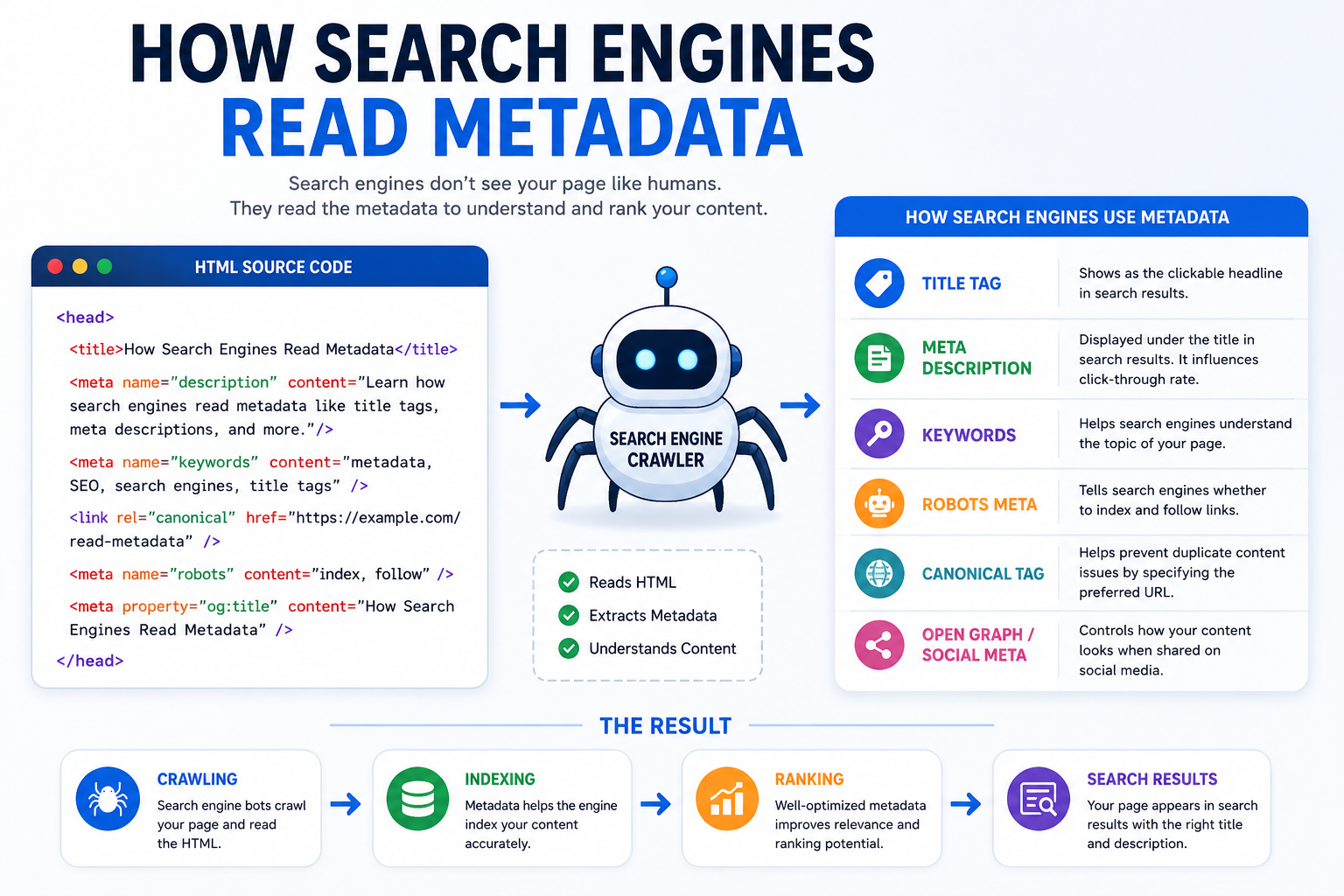
Search engines use many signals to understand a page, and metadata is only one part of that process. Google can examine the content of the page, headings, links, structured data, and other signals alongside supported metadata. This is important because tags in websites do not work independently from the actual content. A perfectly written meta description cannot rescue a thin or irrelevant page.
Google also does not promise to use every piece of metadata exactly as you provide it. For example, a meta description may be used as a search snippet in some situations, but Google can also create a snippet from the visible page content when that better matches a user’s query. The same principle applies to titles: your title element provides a strong signal, but Google may generate a different title link when it believes another source better represents the page.
Do Meta Tags Directly Affect Google Rankings?
The biggest misconception around meta tags is that every tag is a direct ranking factor. That simply is not true. Google does not rank a page higher merely because it contains more tags for websites or because someone has performed extensive meta keyword optimization. Search rankings depend on many factors, including relevance, content quality, technical accessibility, and the overall usefulness of a page.
Still, saying meta tags do not matter would also be misleading. Some tags affect how Google crawls or indexes a page, which can have an enormous SEO impact. A robots tag containing noindex, for example, can prevent a page from appearing in Google Search. Google also recommends descriptive and concise titles and unique page descriptions because they can help users understand what a result offers and may improve search traffic.
The Difference Between Ranking Factors and SEO Signals
A useful way to understand this topic is to separate direct ranking factors from elements that support SEO performance. A title or description may not act like a magic ranking switch, but it can influence how accurately your result communicates with searchers. Better communication can lead to more relevant clicks, stronger user expectations, and a more consistent search presence.
That is why good meta tags are still valuable. SEO is not only about convincing an algorithm to place you higher; it is also about helping the right audience find and choose your content. A search result is often your first interaction with a potential visitor. If the title is confusing or the description is generic, you may lose clicks even when your page ranks well.
The Most Important Meta Tags for SEO
Title Tags and Search Visibility
Although technically the <title> element is not a traditional meta tag, it is commonly discussed alongside SEO metadata because of its major role in search presentation. Google says title links are critical because they give users a quick insight into the content and relevance of a result. Google may use the title element along with headings, prominent text, anchor text, and other sources to generate the title displayed in search results.
For best results, make every title unique, descriptive, and concise. Include your primary topic naturally, but avoid repeating the same keyword over and over. A title such as “Best SEO Tips | SEO Guide | SEO Strategies | SEO Help” looks unnatural and provides little value. Good titles work like newspaper headlines: they tell readers what they will get and encourage the right audience to continue.
Meta Descriptions and Click-Through Rates
A meta description provides a short summary of a page. Google explains that it can be used to inform and interest users, acting almost like a pitch for why the page may answer their question. However, Google can generate snippets from page content and may not always display your exact description.
This does not make meta descriptions useless. Writing unique, accurate descriptions helps you communicate the value of each page and gives Google useful information when generating search snippets. When optimizing meta description images, product pages, blog posts, or service pages, focus on describing the actual content rather than stuffing keywords into a sentence. A clear description that matches search intent is far more valuable than a robotic collection of phrases.
Robots Meta Tags and Indexing Control
Robots meta tags are among the most important technical meta tags because they can directly control how search engines handle a page. Google supports directives such as noindex, nosnippet, and rules that control previews. When conflicting robots instructions exist, Google generally follows the more restrictive rule.
This makes robots tags powerful but potentially dangerous when used incorrectly. Accidentally placing a noindex directive on an important landing page can remove it from search visibility. Always review technical changes carefully and use Google Search Console or appropriate inspection tools to verify important pages. Metadata is like a set of instructions for your website’s front door—you want to make sure you are welcoming search engines to the pages that should be discovered.
Why Meta Keywords Are No Longer Important for Google
The question of meta keywords importance continues to appear because many website platforms still provide keyword fields. WordPress plugins, Magento extensions, and other tools may offer options related to metadata, leading beginners to believe every field must be completed. But a field existing in a CMS does not mean Google uses it as a ranking signal.
Google’s official documentation is clear: the meta keywords tag is not used for indexing or ranking. So, if you are wondering whether meta keywords meaning something for modern Google rankings, the answer is no in terms of direct ranking value. Spend that time improving your page content, title, search intent, internal links, and technical SEO instead.
Meta Keywords Importance: Myth vs Reality
The myth survives because SEO advice from different eras continues to circulate online. You may still find tutorials discussing meta keywords Weebly, meta keywords Magento, or other platform-specific settings as if adding a list of keywords will improve visibility. These recommendations often confuse historical SEO practices with modern search engine behavior.
The reality is straightforward: keywords still matter in SEO, but the obsolete meta keywords tag is not where you should focus. Use important terms naturally in your title, headings, body content, image context, and other relevant places. Google understands pages through the content and signals it can actually use, not through an unsupported list of hidden keyword phrases.
How Metadata and SEO Work Together
Strong SEO comes from alignment. Your page content, title, description, headings, and search intent should all point in the same direction. When metadata and SEO work together, visitors get a clearer picture of what the page offers before they click. This consistency can also reduce the gap between what users expect and what they actually find.
For example, if your page targets “how meta tags affect SEO,” your title should accurately reflect that subject, your description should summarize the answer, and your content should actually explain the relationship. Trying to target an unrelated phrase simply because it has search volume creates a mismatch. Tagging for SEO should support relevance, not disguise irrelevant content.
Creating Good Meta Tags for Every Page
Creating good meta tags starts with understanding the purpose of each page. A homepage, blog article, service page, and product page all need metadata tailored to their content and audience. Avoid copying the same title and description across dozens of URLs because generic metadata makes it harder to distinguish one page from another.
Prioritize accuracy over cleverness. Your metadata should answer a simple question: “What will someone find if they click this result?” Google recommends descriptive, concise titles and unique descriptions that accurately describe individual pages. That principle remains one of the safest and most effective approaches to meta data optimization.
Avoiding Keyword Stuffing and Duplicate Metadata
Keyword stuffing is one of the easiest ways to make metadata look unnatural. Repeating the same phrase excessively does not make a page more useful, and Google specifically advises against stuffing keywords into titles. Instead of forcing every variation into your metadata, choose language that sounds natural and matches the topic.
Duplicate metadata is another common issue. When multiple pages have nearly identical titles and descriptions, users and search engines may struggle to understand how the pages differ. If you manage a large website, programmatic descriptions can be useful when they remain accurate, human-readable, and page-specific.
Other Custom Meta Tags Worth Understanding
Not every custom meta tag is designed for Google rankings. Some tags are used for social sharing, browser behavior, verification, or other platforms. For example, Open Graph metadata can influence how a page appears when shared on social media, while other tags may serve specific applications.
This is where website owners should avoid a one-size-fits-all approach. Before adding a tag, ask what system uses it and what outcome it supports. Google states that unsupported meta tags may simply be ignored, so adding unnecessary metadata does not automatically create an SEO advantage.
Meta Refresh SEO and Other Technical Considerations
Meta refresh SEO is another area where caution is needed. Refresh directives can automatically redirect or reload pages, but technical redirects should generally be implemented using appropriate server-side methods when a permanent or temporary URL change is intended. Poorly implemented refresh behavior can create a confusing experience for both users and search engines.
Technical metadata should always have a clear purpose. The same applies when working with a meta tag WordPress plugin or other CMS tools. Plugins make implementation easier, but they cannot decide what information is genuinely useful for your audience. Technology can provide the toolbox; strategy determines whether you build something valuable with it.
Best Practices for Meta Data Optimization
Effective meta data optimization is less about adding more tags and more about improving the important ones. Start by auditing your most valuable pages. Check whether titles are unique, descriptions accurately summarize the content, and robots directives are correct. Then compare your metadata with the actual search intent behind the keyword.
Here are a few practical priorities:
- Write a unique, descriptive title for every important page.
- Create accurate meta descriptions that summarize the page’s value.
- Use robots directives carefully and intentionally.
- Do not waste time on obsolete meta keywords for Google SEO.
- Keep metadata consistent with the visible content and search intent.
These steps are simple, but consistency is what makes them powerful.
Optimizing Meta Tags in WordPress and Other CMS Platforms
Modern CMS platforms make metadata easier to manage. Whether you are working with WordPress meta tags, Carrd settings, Magento, PrestaShop, or another system, look for the SEO settings that allow you to edit titles, descriptions, and indexing preferences. Google also notes that CMS platforms may provide search engine settings that remove the need to edit HTML directly.
The key is to avoid optimizing fields simply because they are available. Focus on the metadata Google supports and the information that improves the user experience. A well-managed WordPress meta tags strategy should make important pages easier to understand, not turn every settings screen into a keyword dumping ground.
Common Meta Tag Mistakes That Can Hurt SEO
The most serious metadata mistakes are usually technical rather than cosmetic. Accidentally using noindex, creating misleading titles, duplicating descriptions across important pages, or stuffing keywords can all create problems. Another common mistake is assuming that metadata alone can compensate for poor content.
Remember that search engines ultimately want to serve useful results. Metadata can introduce your page, but the page itself must deliver on the promise. Think of your title and description as a movie trailer: they can attract attention, but if the actual movie disappoints, people will not be satisfied.
Final Thoughts: Are Meta Tags Still Worth Optimizing?
So, do meta tags help SEO? Yes—but not in the simplistic way many people imagine. Supported meta tags and related metadata can help Google crawl, index, understand, and present your pages, while strong titles and descriptions can make your search results more useful and appealing. Google’s current guidance makes it clear that meta keywords, on the other hand, have no effect on Google indexing or rankings.
The smartest approach is to focus on quality rather than quantity. Create descriptive titles, useful meta descriptions, and correct indexing instructions. Keep your metadata aligned with the actual content and search intent. When you treat metadata as part of a complete SEO strategy instead of a shortcut to rankings, it becomes a valuable tool for improving visibility and attracting the right visitors.
FAQs About Meta Tags and SEO
1. Do meta tags help SEO rankings?
Some meta tags can significantly affect SEO by controlling crawling and indexing, while titles and descriptions help Google understand and present pages. However, simply adding more meta tags does not automatically improve rankings.
2. Are meta keywords still used by Google?
No. Google states that the meta keywords tag is not used for indexing or ranking and has no effect on Google Search performance.
3. Does Google always use my meta description?
No. Google may use your meta description in search results, but it can also generate a snippet from the visible page content when that better matches the user’s search query.
4. What are the most important meta tags for SEO?
The most useful metadata includes the page title, meta description, and robots directives. Each serves a different purpose, from describing the page to controlling indexing behavior.
5. How do I optimize meta tags for a website?
Write unique and descriptive titles, create relevant meta descriptions, avoid keyword stuffing, check robots directives carefully, and ensure your metadata accurately reflects the content and search intent of each page.