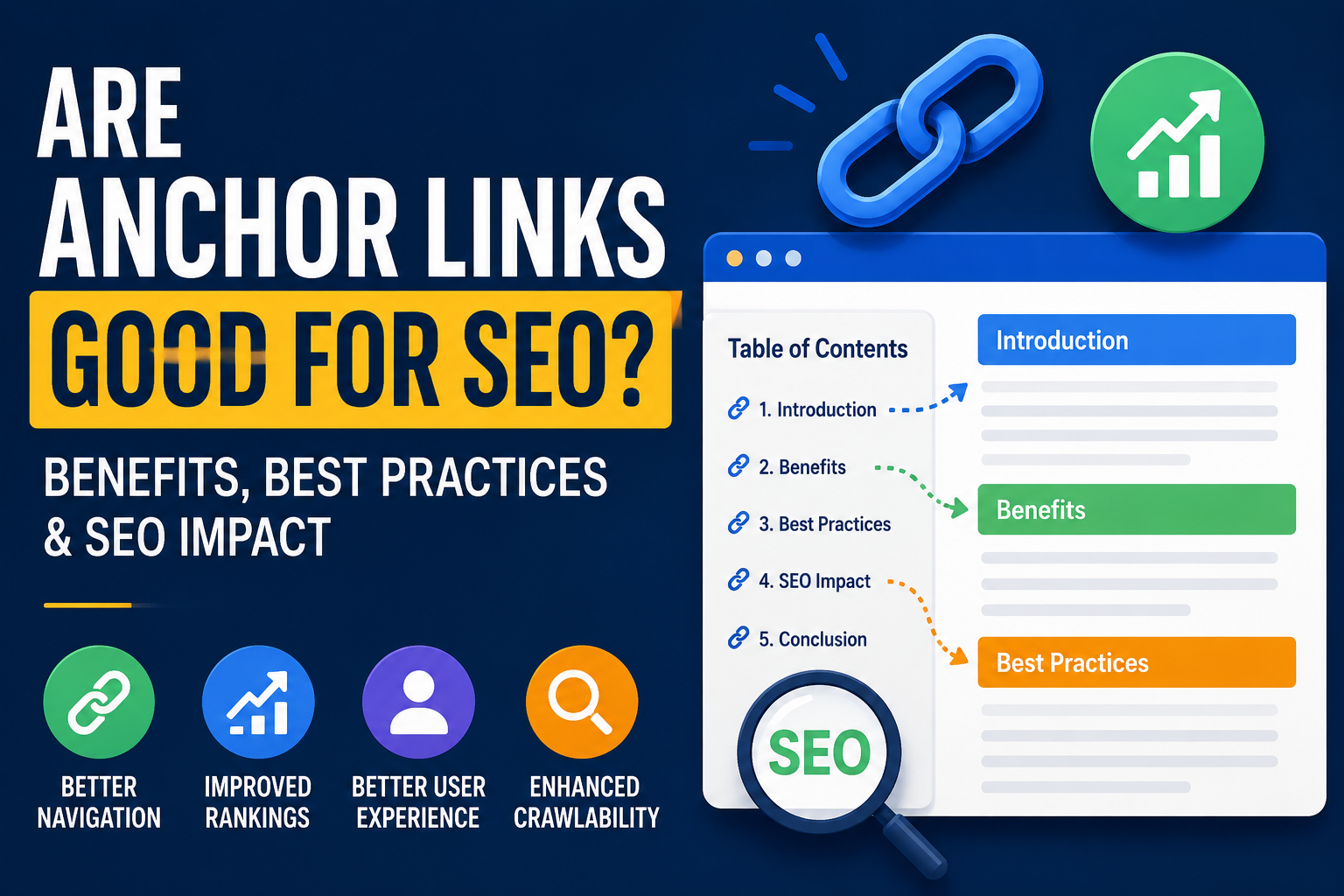
Have you ever landed on a lengthy blog post and wished you could jump straight to the section you needed? That’s exactly what anchor links help users do. They improve navigation, enhance user experience, and make long-form content easier to consume. However, a common query from marketers and website owners is: Are Anchor Links Good for SEO?
The short answer is yes. While anchor links are not a direct ranking factor, they can positively influence several SEO-related metrics. Search engines like Google prioritize websites that provide a great user experience, and anchor links help visitors find information faster. This can increase engagement, improve content accessibility, and make pages easier for both users and search engines to understand.
In this guide, you’ll learn Are Anchor Links Good for SEO, how they impact search performance, their key benefits, common mistakes to avoid, and the best practices for implementing them effectively.
What Are Anchor Links?
Anchor links, also known as jump links, are hyperlinks that direct users to a specific section on the same webpage. Instead of scrolling through thousands of words, visitors can click a link and instantly reach the information they’re looking for.
These links are commonly used in:
- Blog post table of contents
- FAQ sections
- Landing pages
- Product pages
- Knowledge base articles
- Long-form SEO guides
Think of anchor links as a GPS system for your content. They guide readers to their destination without requiring them to search manually.
Are Anchor Links Good for SEO?
The answer is yes, especially when used strategically. Are Anchor Links Good for SEO? Absolutely, because they improve usability and help organize content in a way that benefits both readers and search engines.
Google’s primary goal is to provide the best possible user experience. When visitors can easily navigate your content, they are more likely to stay on your page longer and engage with multiple sections. This creates positive user signals that can indirectly support your SEO efforts.
Anchor links also help search engines understand the structure of your content. In some cases, Google may even display jump links directly in search results, giving users quick access to relevant sections of your page.
Benefits of Anchor Links for SEO
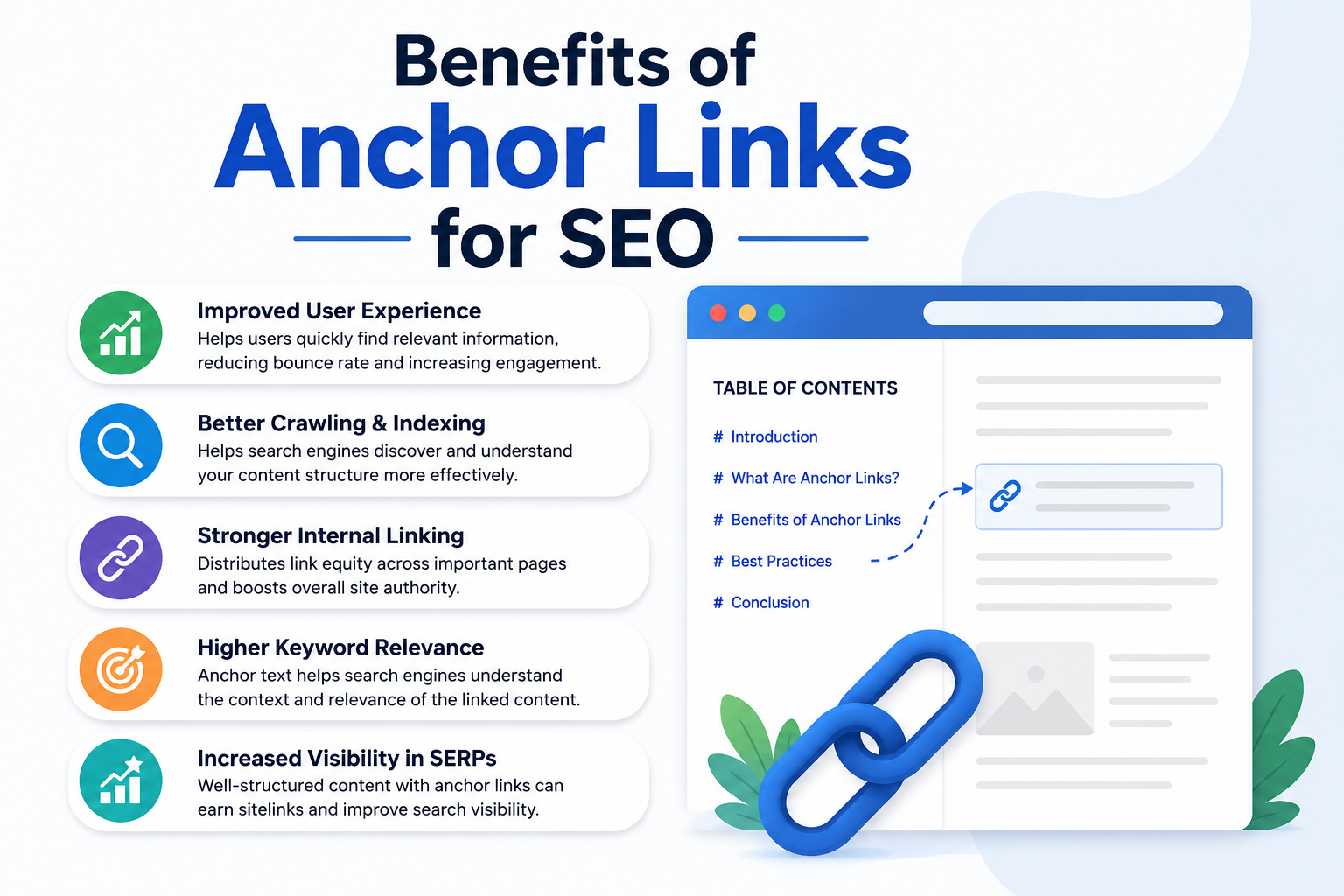
Improved User Experience
User experience is one of the most important aspects of modern SEO. Visitors don’t want to waste time looking for a specific solution by browsing through lengthy pages. Anchor links help users reach relevant information instantly, making content more accessible and enjoyable to read.
Better Content Organization
Large articles often cover multiple subtopics. Anchor links create a logical structure that allows readers to navigate between sections effortlessly. This organization also helps search engines understand how your content is structured.
Increased Engagement
When users can quickly find what they need, they tend to spend more time interacting with the page. Higher engagement often leads to lower bounce rates and increased content consumption, both of which contribute to a stronger website experience.
Enhanced Accessibility
Anchor links make websites more accessible for users on mobile devices and for individuals who rely on assistive technologies. Easy navigation helps ensure that all visitors can access content efficiently.
SEO Impact of Anchor Links
Many website owners wonder whether anchor links directly improve rankings. The truth is that anchor links do not automatically push a page to the top of Google. However, their indirect benefits can contribute to better SEO performance over time.
Here are some ways anchor links can impact SEO:
| SEO Factor | Impact of Anchor Links |
| User Experience | High |
| Content Accessibility | High |
| Crawlability | Moderate |
| Bounce Rate Reduction | Moderate |
| Search Result Enhancements | High |
| Direct Ranking Boost | Low |
The biggest value comes from improving user satisfaction. Search engines reward websites that make information easy to find and consume.
Best Practices for Using Anchor Links
Use Descriptive Anchor Text
Instead of generic phrases like “click here,” use descriptive text that clearly explains the destination. This improves usability and helps users understand what they will find after clicking.
Add a Table of Contents
For articles longer than 1,500 words, a clickable table of contents can significantly improve navigation. It also increases the likelihood of Google recognizing your page structure.
Keep Anchor IDs Relevant
Create clean and meaningful IDs that relate directly to the section topic. This improves maintainability and makes your code easier to manage.
Test Your Links Regularly
Broken anchor links create a poor user experience. Always check that links continue working after updating content.
Common Anchor Link Mistakes
Many websites fail to maximize the benefits of anchor links because of poor implementation.
Avoid these common mistakes:
- Using vague anchor text
- Creating too many anchor links
- Forgetting to test links
- Using duplicate IDs
- Ignoring mobile usability
- Adding anchor links where they provide no value
The goal is to improve navigation, not clutter the page with unnecessary links.
When Should You Use Anchor Links?
Anchor links work best on pages with substantial content. Consider using them when:
- Your article exceeds 1,500 words
- You have multiple sections or chapters
- You publish tutorials or guides
- Your content includes FAQs
- You create pillar pages for SEO
For shorter content, anchor links may not be necessary because users can easily navigate without assistance.
Conclusion
So, Are Anchor Links Good for SEO? Yes, they are. While anchor links do not directly increase rankings, they improve user experience, content organization, accessibility, and engagement. These factors contribute to a stronger overall SEO strategy and help visitors find information more efficiently.
If you’re publishing long-form content, adding anchor links is one of the simplest ways to enhance usability and improve the structure of your pages. When implemented correctly, anchor links benefit both users and search engines, making them a valuable addition to any modern SEO strategy.
FAQs
1. Do anchor links directly improve Google rankings?
No. Anchor links do not directly boost rankings, but they improve user experience and navigation, which can indirectly support SEO performance.
2. Can Google index anchor links?
Google generally treats anchor fragments as part of the same page rather than separate pages, but it can recognize and display section-specific links in search results.
3. Should every blog post have anchor links?
Not necessarily. Anchor links are most useful for long-form articles, guides, tutorials, and pages with multiple sections.
4. Are anchor links good for mobile users?
Yes. Mobile users benefit significantly because anchor links reduce excessive scrolling and help them reach relevant content quickly.
5. What is the best anchor text for SEO?
Descriptive and natural anchor text works best. Avoid generic phrases such as “click here” and instead clearly describe the destination content.