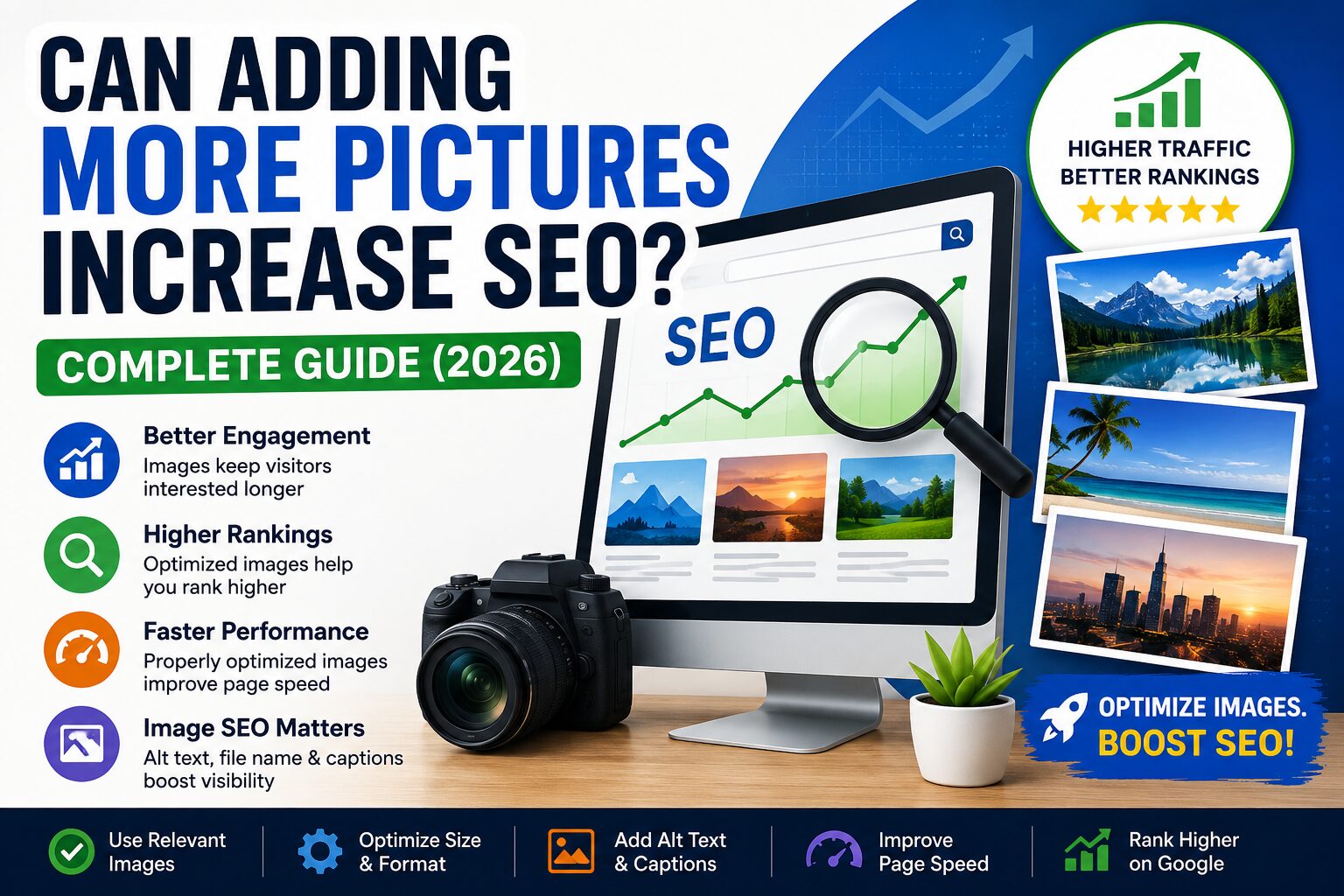
Have you ever wondered whether simply adding more pictures to your blog post can improve your Google rankings? It is one of the most common SEO questions website owners, bloggers, and digital marketers ask. Since visual content makes articles more attractive, many people assume that uploading dozens of images automatically boosts SEO. Unfortunately, that isn’t how modern search engines work.
The truth is more interesting. Adding more pictures can improve SEO—but only when those images genuinely help users and are properly optimized. Google’s search systems evaluate the overall quality of a page, including user experience, page speed, accessibility, and content relevance. Images contribute to all of these factors, but they are not a direct ranking shortcut. Google’s official Image SEO documentation recommends making images discoverable, descriptive, and valuable to users rather than simply increasing image count.
This complete 2026 guide explains exactly how images affect SEO, when adding more pictures helps, when it hurts, and the best image optimization practices you should follow to maximize organic traffic.
Understanding the Relationship Between Images and SEO
Images play a much larger role in SEO today than they did a few years ago. Search is becoming increasingly visual through Google Images, Google Lens, Discover, and AI-powered search experiences. According to recent industry research, Google Images represents roughly one-fifth of search activity, while Google Lens processes billions of visual searches every month.
That doesn’t mean Google rewards pages simply because they contain more images. Google’s algorithms focus on whether the images improve the usefulness of the page. A helpful infographic explaining a complex concept provides value. A screenshot showing step-by-step instructions makes a tutorial easier to follow. An original product photo helps shoppers make purchasing decisions. These images improve the overall content experience.
Random stock photos inserted every few paragraphs usually provide little or no SEO benefit. In some cases, they may even hurt performance by slowing page loading times. Modern SEO rewards quality, relevance, and usability—not quantity alone. Think of images as supporting evidence for your content rather than decoration. The stronger that evidence is, the more valuable your page becomes for readers and search engines alike.
Does Google Rank Pages Higher Just Because They Have More Images?

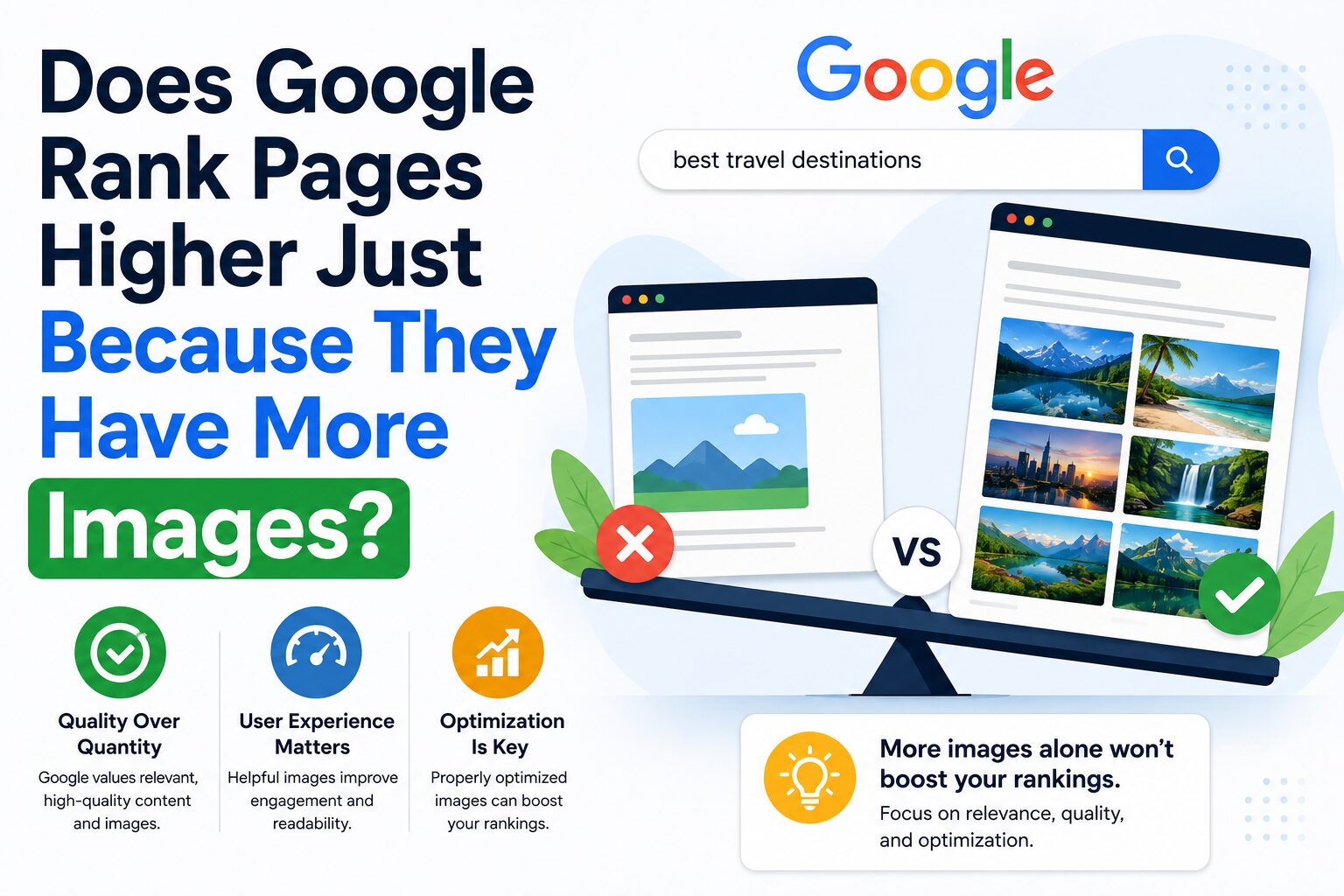
The short answer is No.
Google has never stated that having a higher number of images is a direct ranking factor. Instead, Google’s Image SEO guidelines emphasize helping search engines understand images through descriptive filenames, meaningful alt text, responsive delivery, and high-quality landing pages.
Images influence SEO indirectly by improving user engagement and creating additional opportunities to appear in Google Images and visual search results. If visitors spend more time reading your article because diagrams, charts, or screenshots make it easier to understand, your content becomes more valuable overall. Likewise, optimized images can generate extra organic traffic independently through image search.
Many experienced SEO professionals also agree that images should support great content rather than replace it. Community discussions consistently point out that strong topical authority, search intent, backlinks, and content quality remain far more influential ranking signals than image count alone.
How Images Improve SEO Indirectly
Well-optimized images improve the user experience in several measurable ways. Large walls of text often discourage readers from continuing. Relevant visuals naturally break up content, improve readability, and make information easier to remember.
Images can also increase average session duration because readers spend more time examining illustrations, screenshots, and comparison graphics. Tutorials become easier to follow, product reviews become more trustworthy, and educational content becomes more engaging. All of these improvements support Google’s broader goal of rewarding helpful content.
Another important benefit is visibility across multiple Google surfaces. Properly optimized images may appear in Google Images, Google Discover, AI-generated search experiences, and Google Lens. Each of these channels creates additional opportunities for organic traffic beyond traditional web search. Google continues expanding visual search capabilities, making image optimization increasingly valuable for publishers and businesses alike.
Benefits of Adding Relevant Images to Your Content
| Benefit | How It Helps SEO |
| Better readability | Breaks up long text and improves user experience |
| Higher engagement | Encourages visitors to stay longer |
| Google Images traffic | Creates another source of organic visitors |
| Accessibility | Alt text helps screen readers and search engines |
| Visual search | Improves visibility in Google Lens and AI-powered search |
| Rich results | Supports structured data eligibility |
These advantages become even stronger when images are original rather than generic stock photos. Unique visuals demonstrate expertise and often earn more shares and backlinks than copied imagery.
When More Pictures Can Hurt SEO
Adding too many images without optimization can create several problems.
Large image files dramatically increase page weight, slowing loading speed and negatively affecting Core Web Vitals. Visitors dislike waiting several seconds for oversized images to appear, especially on mobile devices. Faster websites generally provide better user experiences.
Irrelevant images also dilute topical relevance. For example, if you’re writing about technical SEO but include unrelated lifestyle stock photos simply to fill space, those images add no value. Search engines increasingly understand whether visuals genuinely support surrounding content.
Missing alt text, poor filenames like “IMG_12345.jpg,” duplicate images, and unsupported image formats waste many SEO opportunities. Instead of helping rankings, poorly optimized images become unnecessary overhead that hurts performance. Google’s own recommendations emphasize discoverability, descriptive metadata, and optimized landing pages rather than image quantity.
Image SEO Best Practices for 2026
If you want images to contribute positively to SEO, follow these proven best practices:
- Use descriptive filenames before uploading, such as image-seo-checklist.webp instead of IMG001.webp.
- Write natural alt text that accurately describes the image instead of stuffing keywords.
- Compress images to reduce file size without sacrificing visible quality.
- Prefer modern formats like WebP or AVIF whenever practical because they provide smaller file sizes than traditional JPEGs.
- Add structured data where appropriate for products, recipes, articles, and other supported content.
- Use responsive images so different devices receive appropriately sized files.
- Keep images close to the relevant text they illustrate.
- Include original screenshots, charts, or infographics whenever possible because unique visuals provide greater value than generic stock photography.
Following these recommendations improves both traditional SEO and accessibility while creating additional opportunities for visual search visibility.
How Many Images Should a Blog Post Have?
There is no universal rule saying every 500 words requires one image or every article needs exactly ten pictures. The ideal number depends entirely on the topic.
A detailed tutorial might require twenty screenshots to explain every step clearly. A research article may only need three charts to illustrate important statistics. A product comparison could benefit from multiple comparison photos, while an opinion piece might require only one featured image.
Instead of counting images, ask yourself a simple question:
Does this image help the reader understand the content better?
If the answer is yes, include it. If not, leave it out.
Quality always beats quantity.
Common Image SEO Mistakes to Avoid
Many website owners unknowingly reduce their SEO potential by making avoidable mistakes.
Uploading massive uncompressed files is among the biggest issues because it slows loading speeds. Another common problem is keyword stuffing alt text, which makes descriptions unnatural and less useful for accessibility. Using the same stock images found on thousands of websites also limits originality.
Other mistakes include forgetting image sitemaps, failing to lazy-load below-the-fold images, using vague filenames, and placing important text only inside images instead of HTML content.
Small improvements across all these areas often deliver better long-term SEO performance than simply adding dozens of extra pictures.
Conclusion
So, can adding more pictures increase SEO?
Yes—but only when those pictures improve the overall quality of your content.
Google does not reward pages simply because they contain more images. Instead, search engines reward pages that deliver an excellent user experience. Relevant, original, well-optimized visuals help readers understand information faster, increase engagement, improve accessibility, and generate additional traffic from Google Images and visual search.
“Which images genuinely make this page more helpful?” is a better question to ask than “How many pictures should I add?”
That mindset aligns perfectly with Google’s guidance and is the strategy most likely to produce sustainable SEO success in 2026.
Frequently Asked Questions
1. Does adding more images automatically improve SEO?
No. Images help SEO only when they are relevant, optimized, and improve user experience.
2. Can images rank in Google Search?
Yes. Properly optimized images can appear in Google Images, image packs, Google Lens, and other visual search features.
3. What is the best image format for SEO?
WebP is currently the preferred format for most websites because it provides excellent compression while maintaining quality. AVIF is also becoming increasingly popular.
4. Should every blog post include images?
In most cases, yes. Relevant images improve readability and engagement, especially for long-form content.
5. Is alt text still important in 2026?
Absolutely. Alt text helps search engines understand images while improving accessibility for users relying on screen readers. Google continues to the alt text.