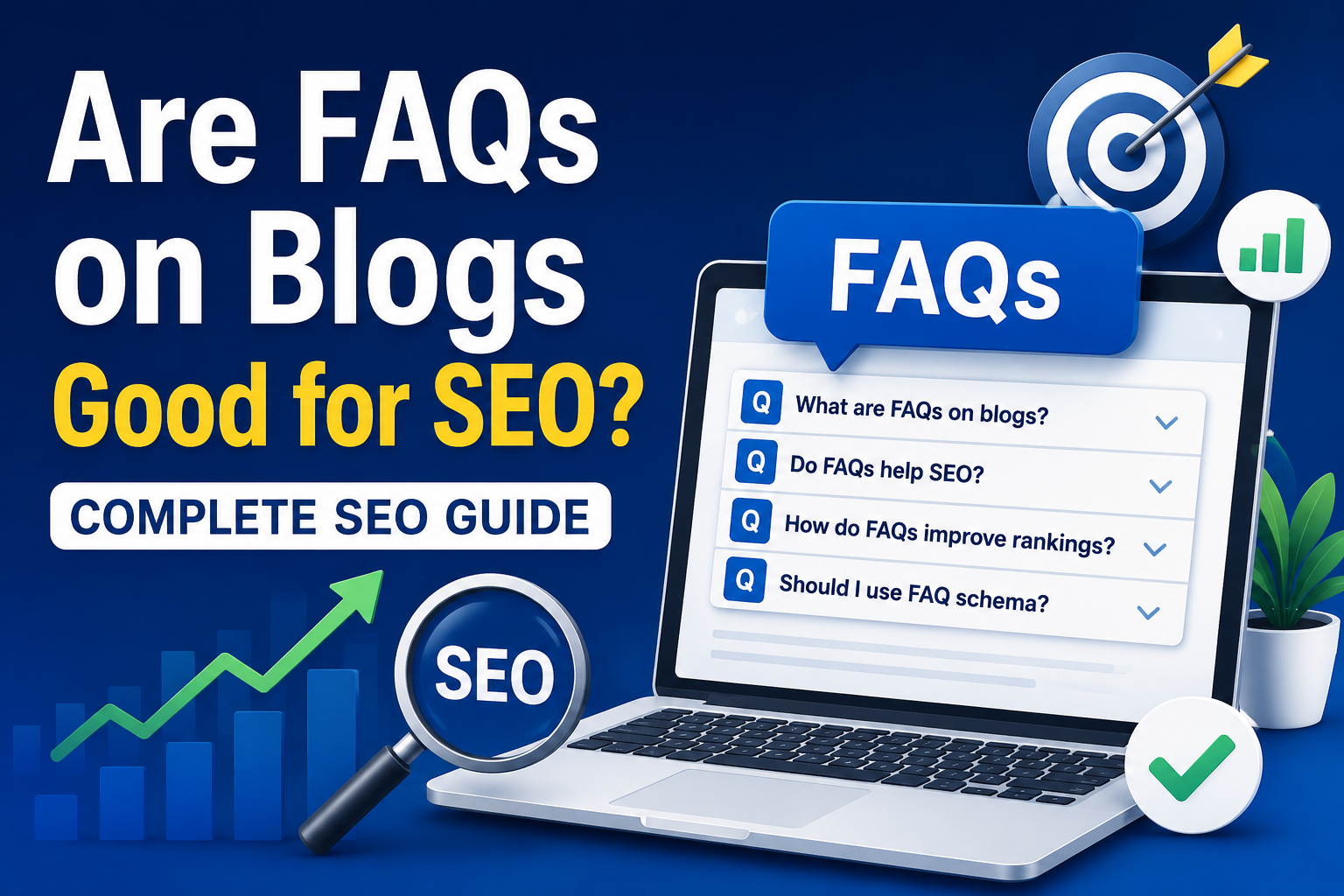
Search engine optimization continues to evolve, but one question keeps appearing among bloggers, marketers, and website owners: Are FAQs on blogs good for SEO? The short answer is yes. When implemented correctly, FAQ sections can significantly improve user experience, increase topical relevance, capture long-tail keywords, and help search engines better understand your content.
The role of FAQs has changed over the years. In the past, many websites relied heavily on FAQ schema to gain extra visibility through rich results. Today, Google has reduced FAQ rich results for most websites, especially commercial sites. However, that does not mean FAQ sections have lost their value. Instead, FAQs have become even more important as a content optimization strategy focused on user intent and AI-driven search experiences. According to Google’s documentation, FAQ rich results are now primarily available to authoritative government and health-focused websites, but FAQ content itself remains valuable for users and search engines alike.
Let’s explore exactly how FAQs impact SEO and how you can use them effectively on your blog.
Understanding FAQs in Modern SEO
What Is an FAQ Section?
An FAQ section, or Frequently Asked Questions section, is a collection of questions and answers designed to address common concerns, doubts, or informational needs related to a specific topic. Think of it as a conversation between your content and your audience. Instead of forcing readers to search elsewhere for answers, your blog proactively addresses their questions.
Modern search engines are increasingly focused on understanding user intent. People rarely search using simple one-word keywords anymore. They ask questions. Queries such as “Are FAQs on blogs good for SEO?” or “Does FAQ schema help rankings?” are examples of how users interact with search engines today. FAQ sections naturally align with these conversational search patterns.
Blogs that include FAQs often provide a more complete content experience. Rather than leaving visitors with unanswered questions, they create a deeper understanding of the topic. This improves trust, engagement, and overall user satisfaction, all of which contribute to better SEO performance over time.
Why Bloggers Use FAQs
Bloggers use FAQs because they bridge the gap between what an article explains and what readers still want to know. Even the most comprehensive article cannot anticipate every question unless those questions are intentionally addressed.
An FAQ section acts like a customer support representative sitting inside your content. It answers objections, clarifies confusion, and provides additional context. This reduces friction for readers and makes your content more valuable. In competitive niches, these small improvements can create a significant advantage over competing articles that stop short of addressing user concerns.
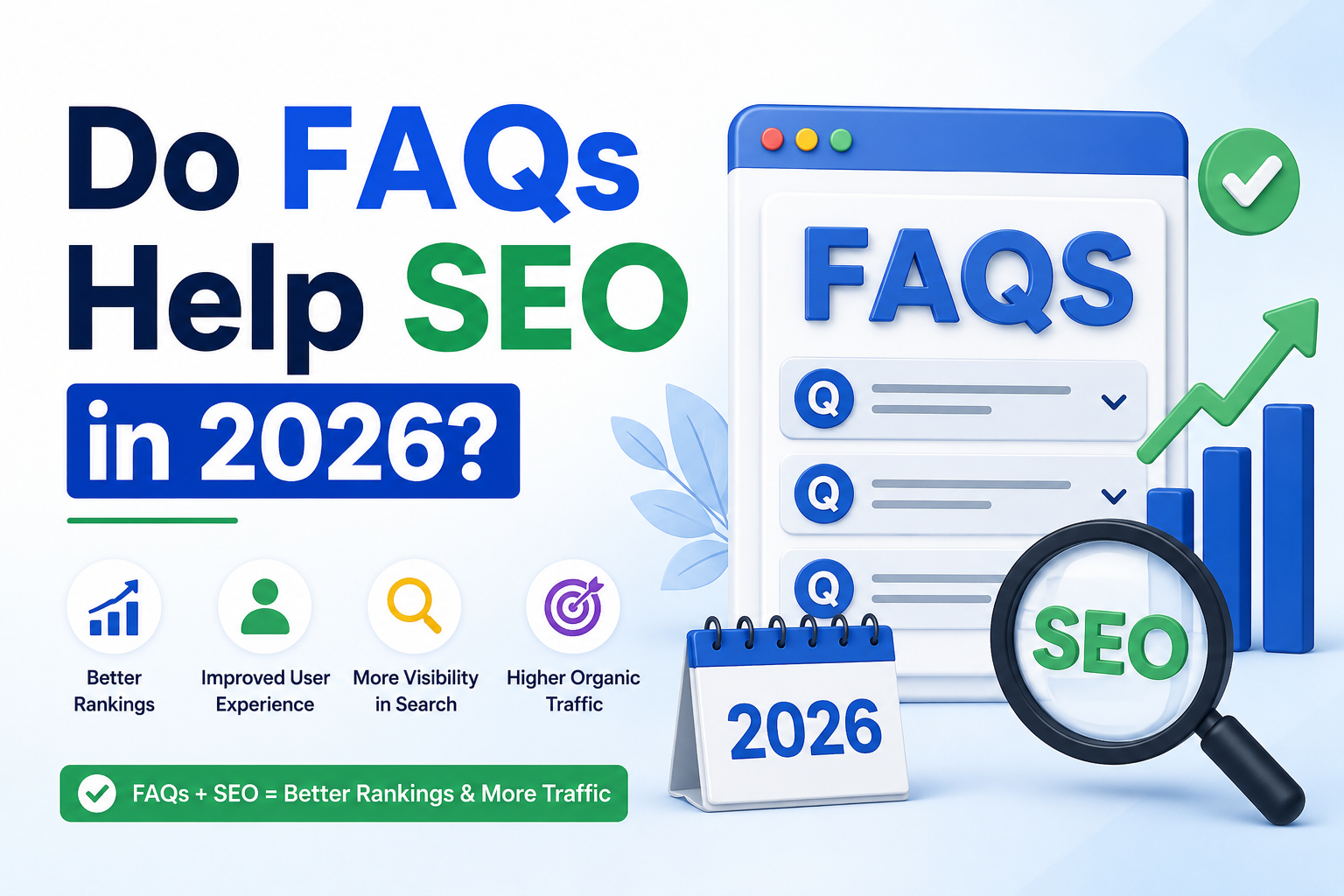
Do FAQs Help SEO in 2026?
Google’s Current View on FAQ Content
Google’s approach to FAQ content has shifted significantly. While FAQ rich snippets have largely disappeared for standard commercial websites, Google still indexes and evaluates FAQ content as part of the page itself. That means the text inside your FAQ section contributes to your page’s overall topical relevance and keyword coverage.
The key difference is that FAQ sections should no longer be viewed as a shortcut for gaining SERP features. Instead, they should be viewed as a method for providing genuinely useful information. Google’s Helpful Content principles reward content that satisfies user intent, and FAQs are excellent tools for accomplishing that goal.
FAQ Content vs FAQ Schema
Many people confuse FAQ content with FAQ schema. They are related but not identical.
| Element | Purpose | SEO Impact |
| FAQ Content | Answers user questions within the article | Improves relevance, engagement, and user experience |
| FAQ Schema | Structured data markup for FAQs | Helps search engines understand content structure |
FAQ content directly benefits readers and contributes to rankings through improved content quality. FAQ schema helps search engines interpret question-and-answer relationships but no longer guarantees rich results for most websites.
Key SEO Benefits of FAQs on Blogs
Targeting Long-Tail Keywords
One of the biggest SEO advantages of FAQs is their ability to capture long-tail keywords naturally by targeting the keyword. Long-tail keywords often have lower competition and higher conversion potential because they reflect specific user intent.
For example, instead of targeting only “SEO FAQs,” your content can rank for searches such as:
- Are FAQs good for SEO?
- How many FAQs should a blog have?
- Does FAQ schema still work in 2026?
- Can FAQs improve organic traffic?
These keyword variations help expand your content’s reach without requiring separate articles for each question. Industry analyses suggest that well-structured FAQ content often contributes a substantial portion of long-tail organic traffic because it mirrors the language real users search for.
Improving User Experience
Imagine entering a store where every employee avoids answering your questions. You probably would not stay long. Websites operate similarly. Visitors expect answers, and FAQ sections provide them quickly.
When users find the information they need without returning to search results, they spend more time engaging with your content. This improves behavioral signals such as session duration, page depth, and overall engagement. While Google does not directly rank pages based on dwell time alone, positive user experiences often correlate with stronger SEO performance.
Increasing Topical Relevance
FAQ sections allow you to cover related subtopics without disrupting the main article flow. They expand the semantic footprint of your content, helping search engines understand the breadth and depth of your expertise.
For example, an article about blog SEO can naturally include FAQs about schema markup, keyword research, internal linking, and content optimization. These supporting topics strengthen the article’s overall relevance and authority.
Supporting AI Search and Voice Search
AI-powered search experiences are becoming more common across search engines and digital assistants. FAQ content is uniquely suited to these environments because it presents information in a clear question-and-answer format.
Many SEO professionals believe FAQs help AI systems understand context more effectively. Community discussions and recent industry observations suggest that structured Q&A content remains useful for AI visibility, even though traditional FAQ rich results have declined.
How FAQs Influence Search Rankings
Search Intent Optimization
Search intent is the foundation of modern SEO. Google wants to deliver results that satisfy users completely. FAQ sections contribute to this goal by addressing secondary and tertiary questions users might have after reading the primary content.
Think of FAQs as safety nets. They catch unanswered questions before readers leave your page. When your content addresses multiple layers of intent, it becomes more valuable in Google’s eyes.
User Engagement Signals
FAQ sections encourage interaction. Readers often scroll further, spend more time on the page, and click additional resources when they encounter useful answers.
Some SEO studies have shown that well-crafted FAQ sections can increase organic impressions and user engagement because they provide comprehensive topic coverage. While engagement metrics alone do not determine rankings, they often reflect content quality and relevance.
FAQ Schema Markup Explained
Does FAQ Schema Still Matter?
This is one of the most frequently asked SEO questions today.
The answer is yes, but not in the same way it once did. Google has significantly restricted FAQ rich results, limiting them primarily to authoritative government and health websites. For most blogs and business websites, FAQ schema will not generate visible search enhancements anymore.
That said, FAQ schema still helps organize content and may assist search engines and AI systems in understanding page structure. It is not a ranking boost, but it remains a useful technical SEO enhancement.
When Should You Use FAQ Schema?
You should consider FAQ schema when:
- Your questions genuinely help users.
- Your answers are unique and informative.
- The FAQ section is visible on the page.
- You want to improve content organization.
Avoid using FAQ schema purely as a ranking tactic. The era of schema-based shortcuts is largely over.
Common FAQ SEO Mistakes
Keyword Stuffing
One of the fastest ways to reduce the value of an FAQ section is keyword stuffing. Questions should sound natural and reflect real user language. Repeating the same keyword excessively creates a poor reading experience and can weaken content quality.
Duplicate FAQs Across Pages
Copying identical FAQs across multiple pages can dilute relevance and create content redundancy. Each page should contain unique FAQs tailored to its specific topic and audience.
Thin or Generic Answers
A question deserves more than a one-sentence response. Generic answers provide little value and fail to differentiate your content from competitors. Every FAQ should deliver meaningful insights that solve the user’s problem.
Best Practices for FAQ SEO
Finding Real User Questions
The best FAQ questions come directly from your audience. Sources include:
- Google autocomplete suggestions
- People Also Ask results
- Search Console queries
- Customer support tickets
- Social media discussions
- Industry forums
Real questions reflect real demand. Building FAQs around these questions ensures your content aligns with actual search behavior.
Writing SEO-Friendly Answers
Great FAQ answers share several characteristics:
- They are clear and concise.
- They answer the question immediately.
- They provide additional context.
- They incorporate relevant keywords naturally.
- They encourage further engagement.
Avoid writing answers solely for search engines. Write them for people first.
Internal Linking Opportunities
FAQs create natural opportunities for internal linking. If an answer references a related topic, link to a more detailed article on your website.
Internal links improve site structure, distribute authority, and help users discover additional content. They also strengthen topical relationships across your website.
FAQs and AI Search Optimization
AI-driven search is reshaping how information is discovered online. Search engines increasingly rely on context, clarity, and relevance when generating answers.
FAQ sections align perfectly with these goals because they provide direct responses to common questions. Industry experts increasingly view FAQ content as a valuable asset for AI search visibility, especially when the answers are detailed, accurate, and user-focused. The emphasis has shifted away from chasing SERP features and toward creating content that AI systems can confidently understand and reference.
Websites that consistently answer user questions better than competitors are likely to remain competitive regardless of how search interfaces evolve in the future.
Conclusion
So, are FAQs on blogs good for SEO?
Absolutely. FAQ sections remain one of the most practical ways to improve content quality, target long-tail keywords, satisfy user intent, and strengthen topical authority. While FAQ schema no longer delivers the visibility benefits it once did, the content itself continues to provide substantial SEO value.
The most successful FAQ sections are not created for algorithms. They are created for people. When you answer real questions with helpful, detailed information, you improve user experience, support AI-driven search visibility, and strengthen your overall SEO strategy.
Rather than viewing FAQs as a technical SEO trick, treat them as an extension of your content. The better you answer your audience’s questions, the better your chances of earning visibility, traffic, and trust.
FAQs
1. Are FAQs still good for SEO in 2026?
Yes. FAQ sections continue to improve SEO by targeting long-tail keywords, enhancing user experience, and increasing topical relevance, even though FAQ rich snippets are limited for most websites.
2. Does FAQ schema improve rankings?
FAQ schema does not directly improve rankings. Its primary role is helping search engines understand content structure, although rich results are now limited to select authoritative websites.
3. How many FAQs should a blog post include?
Most blog posts perform well with 5 to 10 highly relevant FAQs. Focus on quality and relevance rather than quantity.
4. Can FAQs increase organic traffic?
Yes. FAQs can capture additional keyword variations and answer user questions that might otherwise require separate content, helping attract more organic traffic.
5. Should every blog post have an FAQ section?
Not necessarily. Add FAQs when users are likely to have additional questions about the topic. The FAQ section should provide genuine value rather than exist solely for SEO purposes.