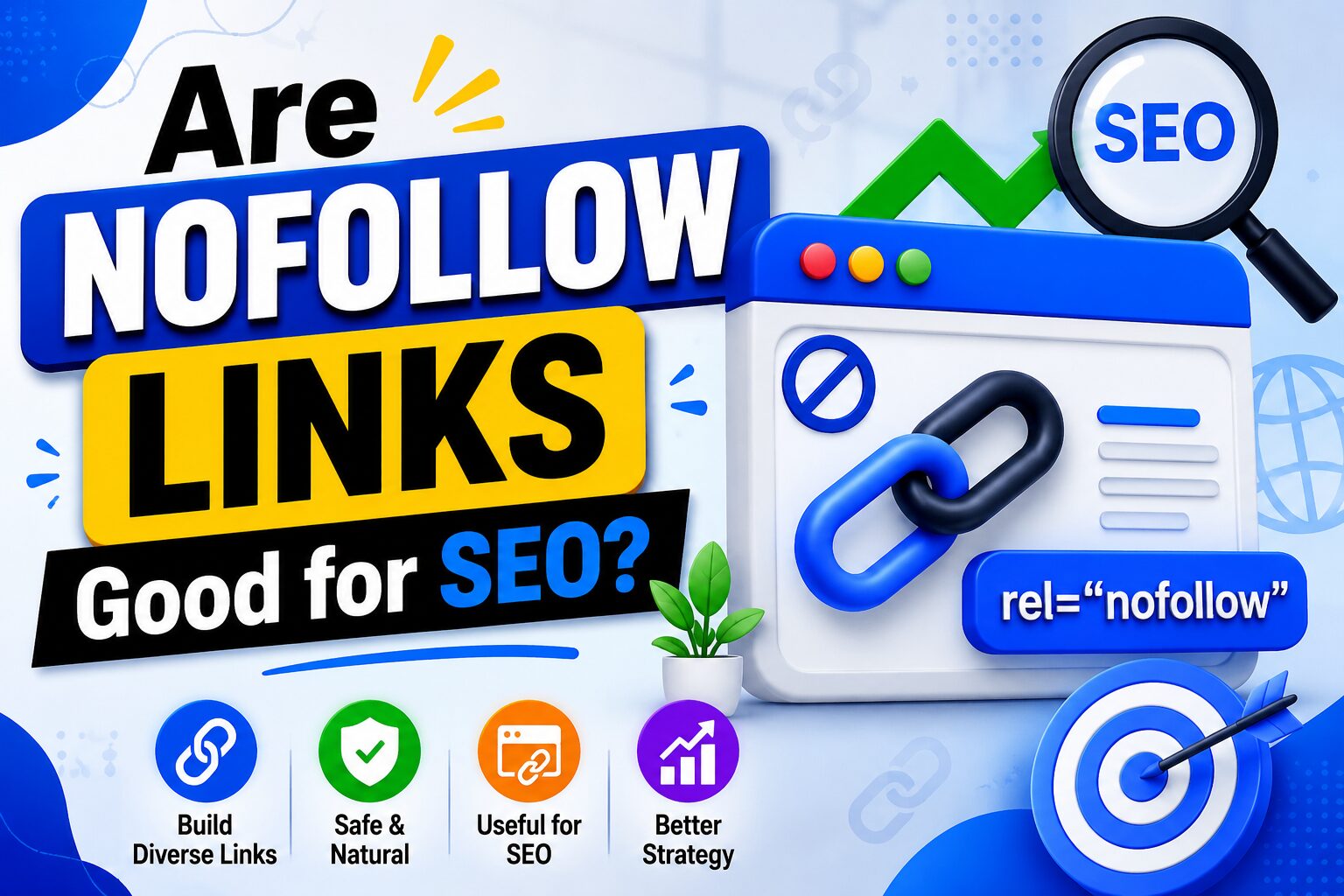
For years, the digital marketing playbook was simple: dofollow links passed the “link juice” that boosted your search visibility, while nofollow links were considered a dead end. Many webmasters still panic when a high-authority platform links to them using a rel=”nofollow” tag, assuming it is a wasted opportunity.
But the search ecosystem has shifted drastically. If you are wondering, “Are nofollow links good for SEO?” or “Do nofollow links help rankings?”, the short answer is an absolute yes—but not in the traditional way you might think.
Let’s dive deep into how these links actually impact your search performance today, how Google treats them, and why a healthy link profile absolutely depends on them.
How Does Google Handle Nofollow Links Today?
Historically, when Google encountered a rel=”nofollow” attribute, it completely dropped the link from its ranking calculations. It did not pass PageRank, and it did not use the anchor text to evaluate the target page.
That system changed when Google introduced a massive shift in how it processes outbound tags. Today, Google treats nofollow attributes as hints rather than absolute directives.
The “Hint” Model and Specialized Attributes
Google no longer completely shuts the door on a webpage just because it has a nofollow tag. Instead, search algorithms use it as a contextual hint to better understand the relationship between the two pages. Along with this change, Google introduced two secondary attributes to provide deeper precision:
- rel=”sponsored”: Explicitly for links that are advertisements, paid placements, sponsorships, or affiliate links.
- rel=”ugc”: Stands for User-Generated Content; applied to links inside blog comments, forum posts, or community submissions.
By switching to a hint model, Google’s algorithms reserve the right to crawl, index, and potentially use a nofollow link for ranking calculations if their automated systems believe the link is highly relevant, editorial, and trustworthy.
Real-World Evidence: Do Nofollow Links Actually Impact Rankings?

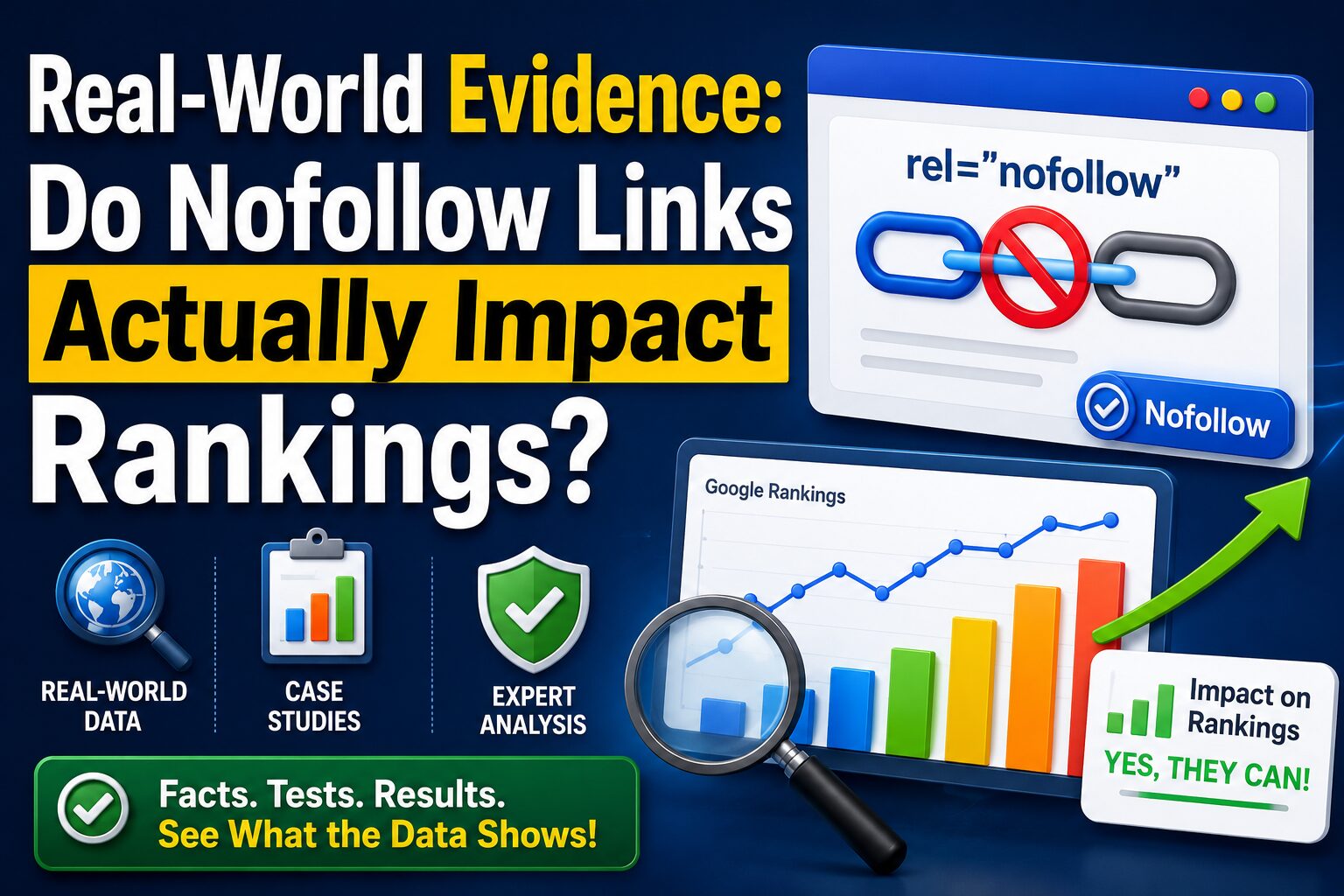
So, do no follow links help seo in the real world? Despite outdated assumptions, real-world data and case studies consistently demonstrate that nofollow links strongly correlate with improved keyword positions.
Why Google Extracts Value from Nofollow Hints
Think about it from a common-sense perspective: if a major, globally trusted news outlet like The New York Times, Wikipedia, or Forbes links to your business, does that link lose all real-world credibility just because their site setup automatically applies a blanket nofollow policy? Google knows it shouldn’t.
When analyzing the overall nofollow links seo value, multiple independent industry experiments have shown that:
- Semantic Context & Anchor Text: In order to comprehend the main idea of your destination page, Google still examines the anchor text of a nofollow link.
- Brand Entities & Trust: Your brand name appearing alongside pertinent keywords serves as a powerful entity validation signal, even if direct PageRank isn’t transferring.
- User Behavior Signals: If human beings frequently click a nofollow link to visit your site, stay on the page, and interact with the content, Google registers that user engagement as a sign of quality.
Ultimately, asking does nofollow links help seo misses the point of modern search engine intelligence. The algorithm is smart enough to reward high-quality references, regardless of the HTML tag attached to them.
Can You Rank #1 on Google Only with Nofollow Links?
When evaluating follow vs no follow backlinks, dofollow links remain the primary mechanism for transferring foundational PageRank. A website that has a backlink profile containing zero dofollow links lacks the core programmatic “votes of confidence” that search crawlers rely on to determine absolute authority.
As a result, it is quite challenging to rank #1 for a highly competitive, commercial search keyword using solely nofollow links.
However, if your content is exceptionally optimized on-page, targets low-to-medium competition long-tail phrases, and receives consistent, high-retention traffic from top-tier un-followed references, you can absolutely claim first-page rankings. For a stable, long-term strategy, however, a natural mix of both is what you want to build.
The Indirect SEO Benefits of Nofollow Links
If you are only assessing is nofollow good for seo based on a direct, mathematical algorithm boost, you are missing out on the broader marketing ecosystem. The indirect benefits of these backlinks often provide a far greater return on investment.
- Targeted Referral Traffic: A single link on a high-traffic site can funnel hundreds of ideal customers directly to your pages. If those users browse your site, sign up for your newsletter, or make a purchase, your overall site authority goes up.
- Organic Backlink Diversity: If a website has 500 links and 100% of them are dofollow, it looks highly unnatural to search engines. It instantly raises a red flag for manual review or algorithmic filters. A natural backlink profile naturally accumulates nofollow links from social shares, discussion boards, and digital PR.
- The Amplification Loop: When other content creators, bloggers, and industry researchers discover your data, infographics, or guides via a nofollow link on a major platform, they will often cite you as a source on their own websites—frequently giving you a highly coveted dofollow link in the process.
Build Nofollow Links and Improve Your SEO
Instead of avoiding nofollow opportunities, you should actively integrate them into your broader growth strategy. When thinking about external links nofollow seo best practices 2026, here is how to use these links to safely scale your presence:
1. Target High-Traffic Communities
Prioritize acquiring link placements on platforms where your actual audience spends time—such as highly active Reddit communities, Quora spaces, niche-specific forums, and premium resource directories. The qualified traffic and brand exposure you generate from these sources are far more valuable than a low-traffic dofollow link.
2. Monitor Your Profile Distribution
It is essential to regularly check no follow backlinks using auditing tools like Ahrefs, Semrush, or Google Search Console. Look for a healthy, balanced ratio. While there is no perfect percentage, a typical, healthy backlink distribution generally sits anywhere between a 60/40 to 80/20 split of dofollow to nofollow links.
3. Leverage Digital PR
Pitch your unique insights, data studies, and expert quotes to journalists. Never abandon a high-tier media opportunity just because the publication uses a blanket nofollow policy for all outward links. The massive trust, secondary media coverage, and brand equity you build from a top-tier media mention are priceless for your overall SEO health.
Frequently Asked Questions
What is the difference between nofollow, sponsored, and UGC links?
- rel=”nofollow”: A broad, catch-all attribute used when you want to link to an external page but do not want to explicitly pass ranking credit or imply a formal endorsement.
- rel=”sponsored”: Created explicitly to label paid placements, ad links, sponsorships, or affiliate partnerships.
- rel=”ugc”: Designed for User-Generated Content; applied to links found inside blog comments, community forum threads, or user profiles.
Do nofollow links pass any SEO value in 2026?
Yes. Because Google officially uses them as context “hints,” they play a meaningful role in passing topical relevance, validating brand authority, and making your overall link profile look natural to search crawlers.
Should you nofollow social media links on your website?
Social media channels automatically assign a nofollow attribute to links pointing back to your site. However, when you are linking out from your own website to your official brand profiles (like your LinkedIn or X page), you should leave them as dofollow. This helps search engines easily map your brand entity across the web.
Should internal links be nofollow or dofollow?
Your internal links should always be dofollow. Using a nofollow tag on links pointing to pages within your own domain breaks the natural flow of PageRank through your site structure and stops search engine spiders from indexing your content efficiently.
Can nofollow links harm your site’s SEO?
No. Getting standard nofollow links from external sites will not harm your website. In fact, having a reasonable balance of these links protects your domain from triggering spam filters that look for artificial, manipulative link-building schemes.
Why did Google change how the nofollow attribute works?
Google updated the system because completely ignoring nofollow links meant their algorithms were missing out on incredible data regarding how websites connect and interact. Shifting to a “hint” model allows Google’s AI to analyze the context of those links to deliver more accurate search results.
Should you nofollow affiliate links?
Yes, Google’s guidelines require you to flag monetization links to avoid search penalties. However, instead of the generic nofollow tag, modern SEO best practices dictate that you should use the more specific rel=”sponsored” tag for all affiliate and paid tracking links.